
 EN
EN



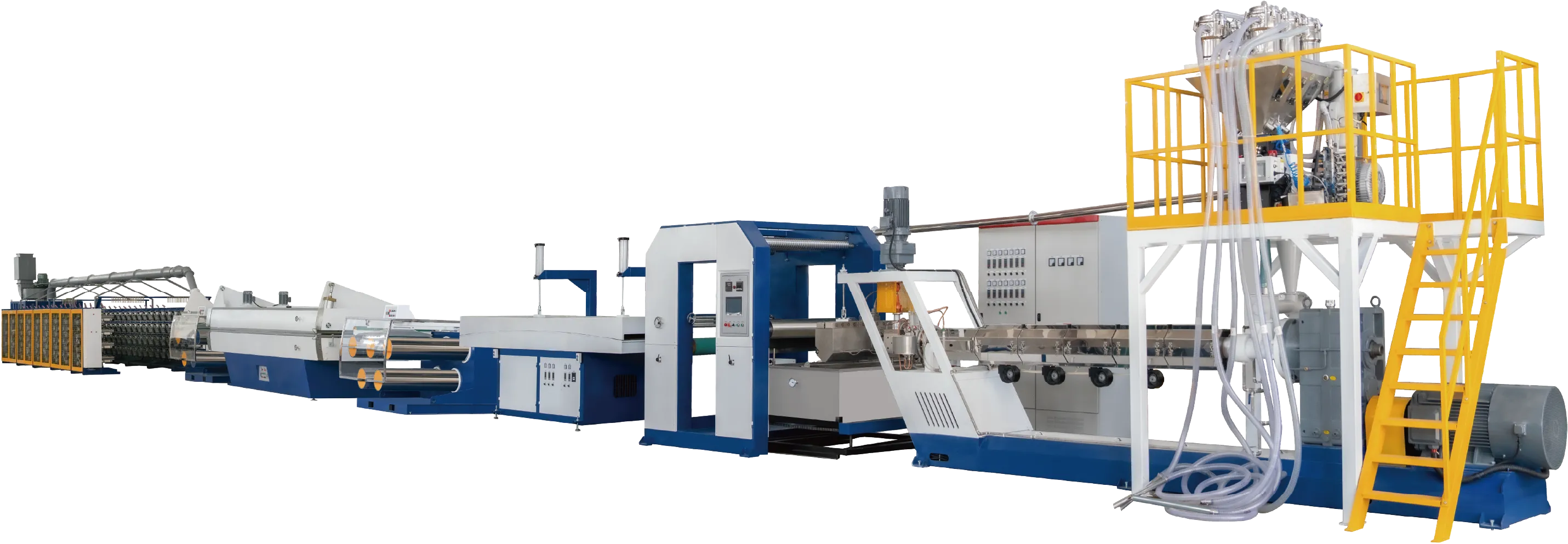
Extruder System Maintenance: Monitoring Wear and Optimizing Lifespan
Daily inspection protocols for screw, barrel, and heater bands
Daily maintenance checks are essential for keeping plastic flat film drawing machines running smoothly and avoiding costly breakdowns. Take a close look at those screws for any signs of material buildup or surface damage using those handy borescope cameras. Check if the heater bands are working properly by running thermal imaging scans across them. Look out for areas where temperature drops more than 15 degrees Celsius from normal readings. Don't forget to clean those barrel vents regularly too. Make sure the thermocouples actually match what shows up on the control panel display. Keep track of pressure changes happening in the feed throat area. When these pressures start fluctuating by more than 8 percent, that's usually when parts begin wearing down. And whenever ceramic insulators show cracks, they need replacing right away since this affects how well heat is maintained throughout the system.
Quantifying wear: Measuring barrel ovality and screw clearance per ISO 11357-3
To check how much the barrels are wearing down, take ovality measurements every quarter with those laser micrometers. We usually place the measuring probes at three different spots along the barrel axis to catch any changes bigger than 0.15 mm, which is basically what ISO 11357-3 says is the danger zone. When it comes to figuring out the gap between screws and barrels, run some polymer leakage tests while processing polypropylene. If the radial gap gets larger than 0.4% of the barrel's total diameter, there's about a 70% chance we'll start seeing metal touching metal problems. Looking at wear patterns makes sense too. HDPE tends to wear things down roughly 30% quicker compared to LDPE based on our resin abrasion data over the years.
Die Head Integrity and Precision Adjustment for Consistent Film Gauge
Thermal calibration and die gap uniformity verification using IR thermography and precision feeler gauges
Getting die temperatures just right makes all the difference when it comes to producing consistent film extrusions. When infrared scans pick up temperature differences greater than plus or minus 2 degrees Celsius across the die face, problems start showing up as inconsistent viscosity and uneven thickness throughout the product. After spotting these hot spots, technicians get out their tools and check the gaps between the die parts. They run laser aligned feeler gauges every 25 millimeters along the edge of the die, looking for any irregularities. Most manufacturers stick to pretty tight specs here, aiming for no more than 0.05 mm variation between points. Why? Because even small discrepancies can lead to finished films that vary in thickness by over 3%, which nobody wants to see on the production floor. Combining these two approaches temperature checks plus physical measurements helps keep the molten material flowing smoothly through the system while cutting down on wasted materials somewhere around 15% in most cases according to industry reports.
Cooling System Optimization to Ensure Dimensional Stability in Plastic Flat Film Drawing Machines
How well we manage heat during the solidification process really affects how consistent the dimensions are in plastic flat film manufacturing. When cooling isn't done right, problems pop up like warping, thickness variations that can go beyond plus or minus 3 percent, and weaker tensile strength. These issues typically raise scrap rates somewhere around 15 percent based on what most manufacturers see. To get the most out of chilling systems, keeping coolant temperatures stable within about one degree Celsius makes a big difference. Multi zone control setups have shown they can improve gauge uniformity by roughly forty percent when working with HDPE films. For different resins, the approach matters too. Chilled air knives work well for some applications, while others benefit from roll based contact cooling. Polypropylene needs heat removal about twenty to thirty percent faster compared to low density polyethylene. Systems that force convection with turbulent flow help speed up solidification and stop air bubbles from getting trapped inside. Monitoring should include regular infrared scans looking at surface temps and checking flow meters on those cooling circuits. Getting the balance right cuts down neck in distortion by approximately twenty two percent and allows production lines to run faster, between twelve and eighteen percent boost in speed, all while maintaining good optical clarity and mechanical properties.
Lubrication Strategy for Gearboxes and Bearings in High-Load Traction Systems
Good lubrication really cuts down on friction and wear for those plastic flat film drawing machines when they're running under heavy loads. According to industry reports, bad lubrication is actually behind more than 40 percent of early bearing failures in industrial gearboxes. And this leads to unexpected shutdowns that cost around seven hundred forty thousand dollars each year according to some research from Ponemon Institute back in 2023. When it comes to handling these tough conditions, synthetic lubricants containing extreme pressure additives tend to beat regular oils hands down. These special lubes keep their thickness intact even when temps climb past 150 degrees Celsius, which makes all the difference in performance.
When it comes to important parts such as helical gears or those tapered roller bearings, oil mist systems really outperform manual greasing methods. These systems cut down on direct metal contact by around 80% during constant operation cycles. Checking oil condition regularly makes sense too most maintenance teams run tests roughly every 500 hours of operation to catch issues with oil thickness changes or dirt getting into the mix before serious problems develop. The newer automated lubrication setups are game changers for many facilities. With set intervals programmed right into the system, these setups not only save money on lubricant usage but also remove the risk of mistakes made by people. Field testing across various industries shows these systems can actually double or even triple how long components last before needing replacement.
| Lubrication Method | Best Application | Performance Benefit |
|---|---|---|
| Oil-mist systems | High-speed gear trains | 50% friction reduction |
| Automated greasing | Intermittent load bearings | 70% less wear particles |
| Synthetic EP oils | Shock-load environments | 40°C higher thermal stability |
Thermal imaging during operation identifies overheating zones requiring lubrication adjustments, while vibration analysis detects early-stage lubrication failures. Maintain lubricant cleanliness below ISO 16/14/11 standards using offline filtration to prevent abrasive wear—every 1% contamination increase accelerates component degradation by 15%.
Traction and Winding System Reliability: Preventive Scheduling and Surface Performance Metrics
Roll surface roughness (Ra) thresholds and nip pressure decay modeling over 12-month cycles
Keeping the right surface roughness (Ra) levels on those traction rolls really matters if we want to avoid all sorts of film defects down the line. When Ra goes above that sweet spot range of 0.3 to 0.5 microns, what happens? Well, guess what? We start seeing scratches and that annoying hazy look in our products. Now let's talk about pressure maintenance for a moment. Looking at how nip pressure declines year after year helps us spot when things might go south. Real world data tells us around 18 to 22 percent pressure loss occurs within just 12 months if nothing gets done about it. So here's what works best in practice: check those Ra values every three months with a good profilometer and adjust the nip settings twice a year. This kind of proactive maintenance cuts unexpected shutdowns by roughly 30 to 40 percent, plus keeps gauge variations under control at about 2 percent max. Replace worn components before Ra drops below 80 percent of original specs or when pressure losses suddenly speed up compared to normal trends. And don't forget—polypropylene lines tend to wear out faster than HDPE ones, usually showing about 15 percent higher wear rates, so these need extra attention.
FAQ
What is the importance of daily inspection protocols for extruder systems?
Daily inspections help in identifying early signs of wear, temperature irregularities, and pressure fluctuations, which can prevent costly breakdowns and maintain the efficiency of the extruder system.
How do you measure barrel ovality and screw clearance?
Barrel ovality can be measured using laser micrometers placed at different points along the barrel axis. Screw clearance is tested through polymer leakage tests during polypropylene processing to ensure metal-to-metal contact does not occur.
What factors should be considered when deciding between rebuilding and replacing components?
Total Cost of Ownership analysis across different resin types helps evaluate whether to rebuild or replace components based on factors like wear levels, downtime, and efficiency loss.
How can die head integrity be ensured?
Die head integrity is maintained through precise thermal calibrations and die gap uniformity checks, using IR thermography and laser aligned feeler gauges to detect and correct any inconsistencies.
What strategies improve traction system reliability?
Regular maintenance checks on roll surface roughness levels and nip pressure settings can prevent defects and optimize traction system reliability.
Table of Contents
- Extruder System Maintenance: Monitoring Wear and Optimizing Lifespan
- Die Head Integrity and Precision Adjustment for Consistent Film Gauge
- Cooling System Optimization to Ensure Dimensional Stability in Plastic Flat Film Drawing Machines
- Lubrication Strategy for Gearboxes and Bearings in High-Load Traction Systems
- Traction and Winding System Reliability: Preventive Scheduling and Surface Performance Metrics
-
FAQ
- What is the importance of daily inspection protocols for extruder systems?
- How do you measure barrel ovality and screw clearance?
- What factors should be considered when deciding between rebuilding and replacing components?
- How can die head integrity be ensured?
- What strategies improve traction system reliability?