
 EN
EN



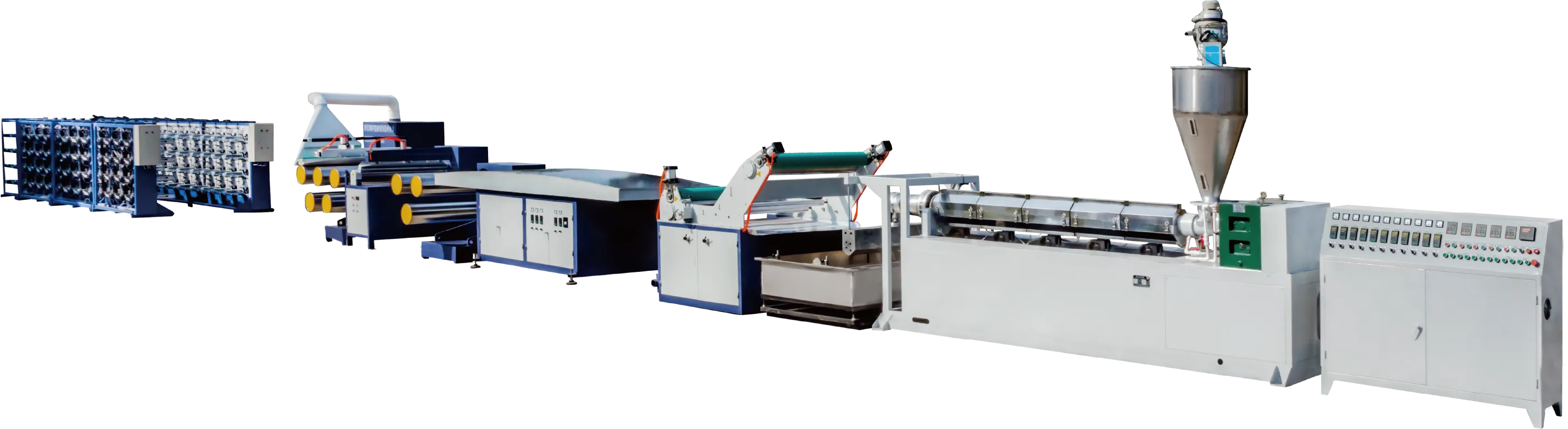
Hardware–Software Interface Failures in Plastic Flat Film Drawing Machines
Z-axis drift and cursor jitter due to CAD–motion controller misalignment
The drifting along the Z-axis and those annoying cursor wobbles seen in plastic flat film drawing machines usually come down to timing problems between the CAD software and what the motion controllers are actually doing. When there's even a tiny delay (say around 5 milliseconds or more) sending those coordinates from CAD to the machine, it builds up all sorts of positioning mistakes during fast drawing operations. What happens? The machine starts drifting vertically at about 0.2 mm for each meter drawn, plus the cursor just jumps around unpredictably when trying to set up the film path. Things get worse when capacitors in the control hardware start wearing out, particularly if the workshop gets hotter than 35 degrees Celsius regularly. The constant heating and cooling breaks solder connections and messes with signals going through the system. Most operators find that they need to reset their alignment settings roughly every 200 hours of operation. This brings down drift issues by about two thirds, keeping things accurate enough for most applications under ISO 2768 requirements, though some tighter tolerances might still require additional adjustments.
Real-time film tension control desynchronization with AutoCAD system variable updates
| Synchronization Gap | Impact on Film Quality |
|---|---|
| >50ms delay | Micro-tears in polyethylene layers |
| >100ms delay | Visible thickness variations (up to 12% deviation) |
Mitigation requires deterministic EtherCAT networks that synchronize servo updates with CAD command cycles at 1kHz refresh rates. Regular firmware validation prevents memory leak cascades that destabilize tension feedback loops.
Critical System Variable Configuration for Plastic Flat Film Drawing Accuracy
Optimizing VIEWRES, SNAPZ, and DISPSILH for Z-depth fidelity and line smoothness
Getting the AutoCAD system variables right makes all the difference when it comes to dimensional accuracy for those plastic flat film drawing machines. Take the VIEWRES parameter for instance. This setting basically determines how curves look on screen. If someone sets it too low, say under 500, then arcs will appear jagged instead of smooth, which can really mess up the representation of film edges during path simulations. Most folks find that setting VIEWRES to at least 2000 works best. Just type in the VIEWRES command and adjust accordingly. Doing so ensures that those curved extrusion paths show up as actual vectors on the display rather than just broken up segments that don't accurately represent what's happening in real life.
| Variable | Default Value | Optimal Setting | Impact on Film Drawing |
|---|---|---|---|
| VIEWRES | 1000 | ≥2000 | Eliminates jagged edges in curved extrusion paths |
| SNAPZ | 0 (Off) | 1 (On) | Prevents Z-axis drift during multi-layer alignment |
| DISPSILH | 0 (Off) | 1 (On) | Clarifies material thickness in 3D wireframe views |
Graphics Performance Bottlenecks in Plastic Flat Film Drawing Workflows
GPU rendering latency when overlaying real-time tension graphs on DWG canvas
Integrated GPUs frequently cause rendering delays of 200ms+ when overlaying real-time tension graphs onto DWG canvases—disrupting operators‘ ability to correlate film thickness adjustments with live data. Professional-grade graphics cards resolve this by offloading 80% of computation from the CPU, enabling fluid visualization of extrusion dynamics. To optimize:
- Enable hardware acceleration in AutoCAD
- Reduce viewport elements during overlay operations
- Allocate dedicated GPU memory for tension monitoring plugins
Cursor lag and line discontinuity during high-speed film path simulation
When frame rates drop below 30fps during path simulations, we start seeing those annoying cursor jumps and broken polylines which are basically deal breakers for anyone working on micron level film calibration stuff. Most of the time this happens because some background processes are eating up all the GPU power without us even noticing. Turning off those fancy high fidelity effects like anti aliasing makes a big difference during these simulations, cutting down the render workload by about half. Workstation grade GPUs can usually handle 4K resolution while keeping frame rates above 60fps if properly configured. For best results with 3DCONFIG, it pays to set things up so simulation stability takes precedence over making everything look pretty on screen.
X-Ref–Related Command Failures in Multi-Layer Plastic Film Calibration Drawings
TRIM, EXPLODE, and COPY errors from unresolved x-ref paths in production schematics
Missing external references really mess up important CAD work when calibrating plastic flat film drawing machines. If production blueprints point to files that aren't there, basic commands start acting up. The TRIM tool won't cut geometry properly, EXPLODE might wreck nested parts, and COPY ends up duplicating partial data instead of complete elements. These problems snowball into measurement issues throughout complex multi-layer film designs. Smart techs always check those x-ref paths first thing before starting any calibration routine. Having regular checks in place saves money by avoiding expensive recalibrations later on. A good practice is keeping all reference files in one central location too. This makes sure commands run smoothly without interruptions, which matters a lot when adjusting film thicknesses down to precise measurements during production runs.
Frequently Asked Questions (FAQs)
What causes Z-axis drift in plastic flat film drawing machines?
Z-axis drift in these machines is primarily due to timing discrepancies between the CAD software and motion controllers. Small delays in transmitting coordinates can result in positioning errors during fast operations, exacerbated by hardware wear and temperature fluctuations.
How can I improve film tension control synchronization with CAD systems?
Using deterministic EtherCAT networks is key for synchronizing servo updates with CAD command cycles at 1kHz refresh rates. Regular firmware validations also help prevent system desynchronization caused by memory leaks.
Which AutoCAD variables should be optimized for better film drawing accuracy?
To enhance drawing accuracy, focus on optimizing VIEWRES for curve smoothness, SNAPZ for Z-axis consistency, and DISPSILH for visual clarity in complex 3D structures.
Table of Contents
- Hardware–Software Interface Failures in Plastic Flat Film Drawing Machines
- Critical System Variable Configuration for Plastic Flat Film Drawing Accuracy
- Graphics Performance Bottlenecks in Plastic Flat Film Drawing Workflows
- X-Ref–Related Command Failures in Multi-Layer Plastic Film Calibration Drawings