
 EN
EN



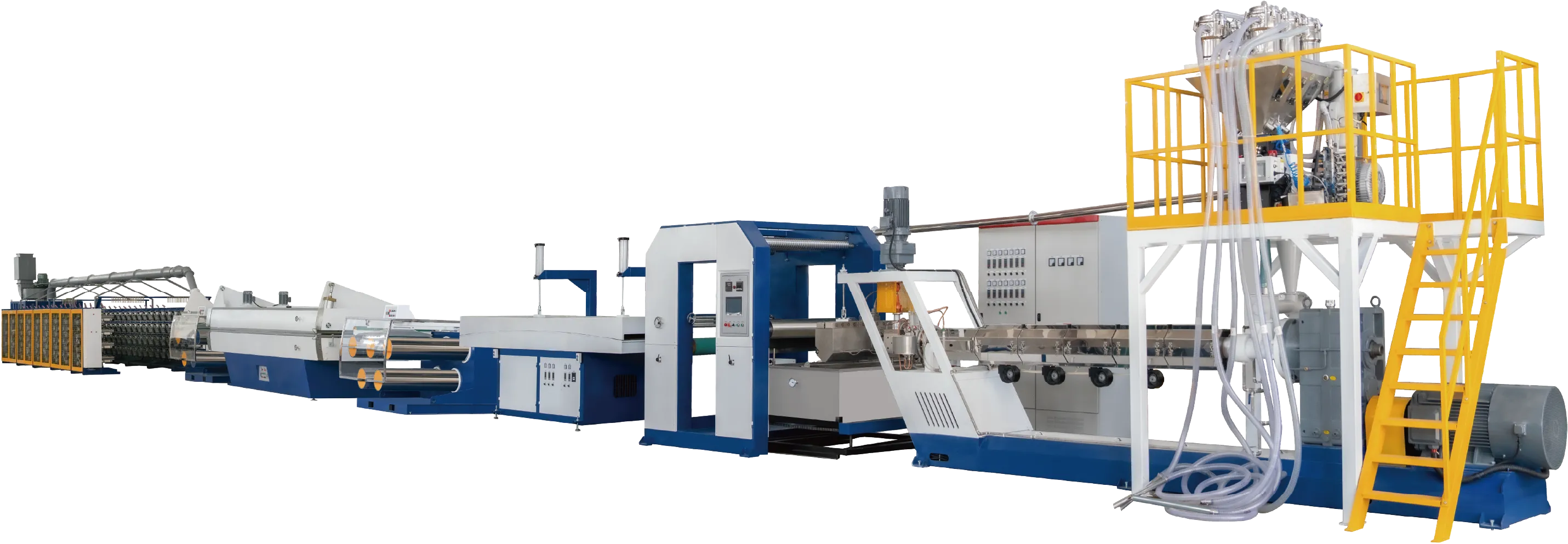
Thermal Processing Behavior on Plastic Flat Film Drawing Machines
Melting Point, Melt Viscosity, and Extrusion Stability
Polypropylene, or PP for short, typically starts melting around 160 to 170 degrees Celsius. High density polyethylene (HDPE), on the other hand, begins to soften somewhere between 130 and 135 degrees. The fact that PP has this higher melting point means manufacturers need to spend extra time heating it up before processing. But there's a tradeoff here too because PP actually performs better when being melted down for things like plastic films. HDPE works differently since its material flows much easier through dies which allows production lines to run at higher speeds overall. When it comes to how they handle pressure during extrusion processes, these materials behave quite distinctively. PP tends to maintain consistent thickness even when subjected to intense stress thanks largely to its semi crystalline nature. HDPE doesn't have quite the same structural advantages though. Its molecules are arranged in a way that makes it less prone to sudden surges during processing. What really matters in all this is something called crystallinity levels. For PP, those nicely organized crystal structures give it predictable dimensions across various temperatures. With HDPE however, the straight chain molecules require much closer attention to temperature controls otherwise we might end up with warped products or inconsistent measurements.
Quenching Response, Draw Ratio Limits, and Dimensional Control
Quick cooling plays a big role in maintaining how molecules align and keeping structures intact. High density polyethylene tends to form crystals about 30 percent quicker than polypropylene because it has a slightly lower glass transition temperature (-12 degrees Celsius compared to -10C for PP). This difference allows HDPE to achieve draw ratios as high as 9:1, which beats what's practically possible with PP at around 7:1. On the flip side, polypropylene can handle much stronger orientation forces without getting cloudy or distorted, making it better suited for clear films made through biaxial stretching processes. When working with HDPE, things get tricky once temperatures pass 200 degrees Celsius. The material starts shrinking due to thermal stress, potentially causing gauge variations of plus or minus half a millimeter. Polypropylene offers manufacturers an extra five degree margin during cooling while still maintaining very tight thickness control within 0.2 mm tolerance ranges. This makes PP particularly useful for applications where precision matters most. For HDPE in biaxial drawing operations, careful annealing steps help reduce problems like necking and unstable edges that tend to occur otherwise.
Mechanical Performance After Orientation in Flat Film Drawing
Tensile Strength, Modulus, and Cold Flexibility Trade-offs
The machine direction (MD) orientation really boosts the tensile strength and modulus properties of both polypropylene (PP) and high density polyethylene (HDPE). When it comes to actual numbers, PP usually shows about 20 to 30 percent better MD tensile strength compared to HDPE after drawing processes. This happens because PP has this semi crystalline structure that lines up pretty well when stress is applied. But there's always something for nothing in materials science. Below zero degrees Celsius, PP starts getting quite stiff and turns brittle around freezing point temperatures. HDPE tells a different story though. It stays flexible and maintains good impact resistance even at minus thirty degrees Celsius. That makes all the difference for products meant for freezer storage manufactured using plastic flat film drawing equipment. Most manufacturers find that HDPE's ability to resist cracking in cold conditions beats out PP's superior strength characteristics for these specific applications.
Density, Gauge Efficiency, and Optical Clarity in Thin Films
The higher density of HDPE (around 0.94 to 0.97 grams per cubic centimeter) means manufacturers can produce thinner materials than polypropylene (which ranges from 0.90 to 0.91 g/cm³) while still achieving similar barrier protection against moisture and gases. This translates into roughly 15% less material needed for the same job. On the other hand, polypropylene contains an amorphous phase that gives it much better optical clarity when oriented properly during processing. The result? Haze levels drop by more than 90% compared to HDPE, making PP transparent enough for applications where customers need to see what's inside the package. That kind of visibility makes all the difference on store shelves where products compete for attention. When subjected to mechanical stress, particularly in thin films below 30 microns thick, HDPE tends to show visible stress whitening after impacts or bends. Polypropylene doesn't suffer from this issue though, staying clear and free of defects even under similar conditions.
Environmental Durability for Long-Term Film Applications
UV Resistance, Stabilizer Compatibility, and Outdoor Service Life
The saturated hydrocarbon structure of HDPE gives it natural UV resistance, so very little stabilizers are needed when using it outside. Polypropylene is different though. It has these tertiary carbon atoms that just can't handle sunlight as well, which means manufacturers need to add between 0.3 and 0.8 percent UV inhibitors to get similar results. When we look at accelerated weather tests following ASTM D4329 standards, HDPE keeps around 90% of its original tensile strength after spending 2,000 hours under UV light. Without any stabilization, regular PP starts breaking down almost 40% quicker than that. Farmers who use these materials for covering crops know this difference firsthand. HDPE films last anywhere from 5 to 7 years outdoors even without extra additives, whereas stabilized PP versions usually only make it 3 to 4 years before they start deteriorating.
Chemical and Thermal Resistance in Industrial Exposure Scenarios
When it comes to chemical packaging made using plastic flat film drawing equipment, HDPE stands out for its ability to withstand acids, alkalis, and most organic solvents. Tests show that after sitting immersed for 30 days in solutions ranging from pH 3 to 12, HDPE only loses around 5% of its weight. On the other hand, polypropylene (PP) handles heat much better, staying dimensionally stable even at temperatures as high as 120 degrees Celsius compared to HDPE's limit of about 100 degrees. But watch out for chlorinated solvents with PP they can really break it down over time. From a barrier protection standpoint, HDPE actually performs better than PP, cutting down chemical penetration by roughly 18% because it simply doesn't let stuff through as easily. Both plastics need antioxidant additives during the extrusion process at high temps to prevent breakdown from oxidation. This becomes especially important when running production close to those maximum temperature thresholds where things start going wrong fast if not properly managed.
Application Alignment: Matching PP or HDPE to Your Flat Film Drawing Output
The choice between polypropylene (PP) and high density polyethylene (HDPE) really comes down to what matters most for the final product, not just how easy it is to process. For applications needing clear visibility, rigidity, ability to withstand heat, and maintain shape even when warm, PP is usually the go to material. Medical packages, containers that hold hot liquids, and those fancy retail wrap jobs all benefit from PP's melting point around 160 to 170 degrees Celsius, which keeps things intact during those intense heating processes on film making equipment. On the other hand, HDPE stands out with its excellent moisture blocking properties, resistance to tears, and stays tough even in cold conditions. That makes HDPE ideal for things like tank linings, farm coverings, and those thick duty shopping bags we all know. At about 0.94 to 0.96 grams per cubic centimeter density, HDPE lets manufacturers get away with thinner materials while still getting good results. So if crystal clear appearance and handling heat are critical factors, go with PP. But when the job demands strength against physical stress, weather challenges, and needs to keep contents protected from outside elements, HDPE tends to be the better bet for most real world applications.
FAQs
What are the main differences in thermal properties between PP and HDPE?
Polypropylene (PP) has a higher melting point, requiring more heat to process, while HDPE softens at lower temperatures but allows faster production due to easier flow through dies.
Why does HDPE form crystals faster than PP during cooling?
HDPE forms crystals about 30% quicker than PP due to its slightly lower glass transition temperature, aiding in achieving higher draw ratios.
How do PP and HDPE compare in terms of UV resistance?
HDPE naturally resists UV radiation better due to its saturated hydrocarbon structure, whereas PP requires UV inhibitors to achieve similar outdoor durability.
What makes PP more suitable for clear films?
PP's amorphous phase enhances its optical clarity, reducing haze levels significantly and making it ideal for applications requiring transparency.
How do chemical and thermal resistances differ between PP and HDPE?
HDPE generally resists chemicals better, especially acids and alkalis, while PP maintains dimensional stability at higher temperatures but is vulnerable to chlorinated solvents.