
 EN
EN


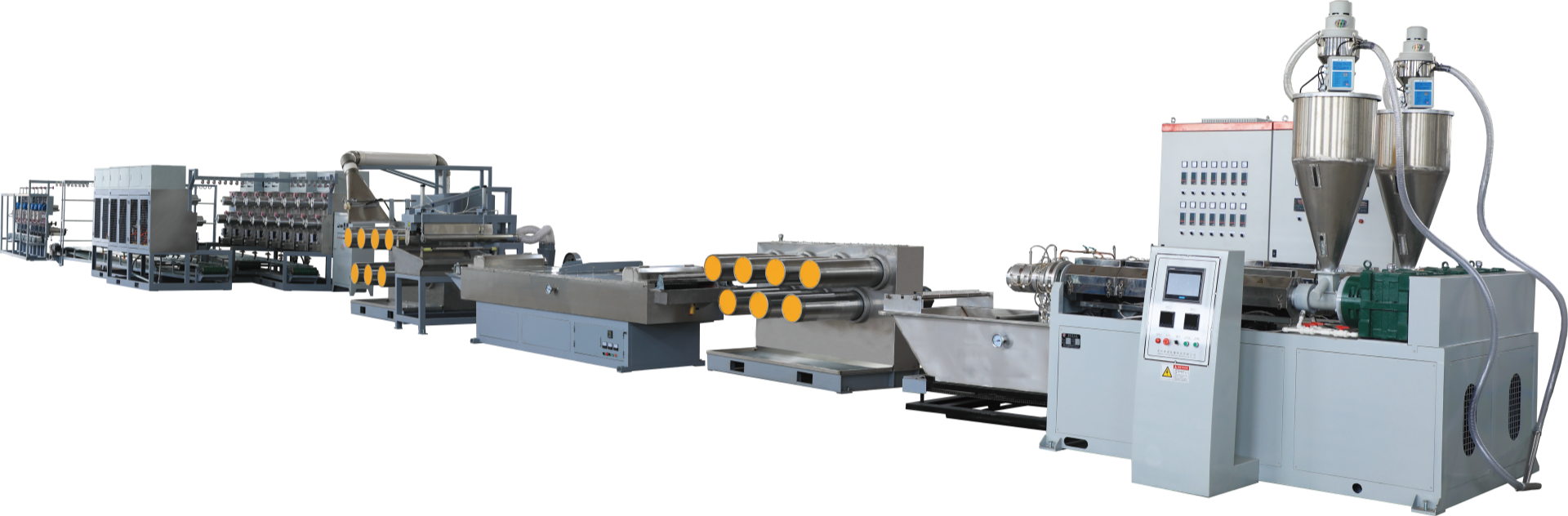
Acoustic Engineering Solutions for Plastic Recycling Granulation Units
Effective acoustic engineering directly targets the noise sources within a plastic recycling granulation unit. Three core design modifications—rotor geometry, insulated enclosures, and vibration-dampening structures—work together to create a quieter and safer production environment.
V-Cut Rotors and Acoustic Optimization of Cutting Geometry
V-cut rotors replace straight knives with an angled, scissor-like cutting profile that shears plastic gradually along the blade length instead of crushing it in a single impact. This spreads cutting force over a longer arc, converting high-frequency clatter into a smoother, lower-level hum and dramatically reducing peak noise energy—especially during initial material engagement. Traditional straight rotors generate loud, percussive sounds because the entire blade engages simultaneously. Rotor speed and knife clearance are fine-tuned to match material hardness: reducing the cutting gap minimizes impact shock, the primary source of airborne noise. These adjustments address the root cause of most granulator noise, often lowering sound pressure levels at the source without compromising throughput.
Soundproof Enclosures and Double-Layer Insulated Structures
Well-designed enclosures contain airborne noise before it reaches the operator zone. A double-layer insulated structure uses an outer rigid shell—often incorporating mass-loaded vinyl or composite panels—and an inner perforated metal liner, separated by a dense absorption layer such as open-cell acoustic foam or mineral wool. This mass-air-mass barrier effectively blocks and dissipates sound energy across frequencies. Resilient mounts decouple the layers to prevent vibration bridging, while access doors and feed chutes feature magnetic gaskets and heavy-duty hinges to preserve acoustic integrity. Properly installed, such enclosures achieve 10–15 dB(A) noise reduction—supporting compliance with OSHA’s 8-hour exposure limit.
Vibration-Dampening Frames and Adjustable Hopper Designs
Structure-borne vibration contributes significantly to overall noise, even when airborne sound is controlled. A rigid frame with integrated elastomeric mounts or coil-spring isolators decouples the granulator from the floor, stopping low-frequency rumble from propagating through the building. Mounts are selected based on machine weight and operating frequency range. An adjustable hopper design further reduces noise by eliminating loose-panel rattle: bolted, tunable baffles prevent scrap from bouncing and creating impact noise, while steady feed control minimizes shock loads that excite resonance. Together, these features suppress structural vibration, improve bearing life, and reduce maintenance intervals.
Operational Best Practices to Sustain Low-Noise Performance in Plastic Recycling Granulation Units
Sustaining low noise requires consistent operational discipline—not just initial engineering. Two evidence-based practices—drive control and preventive maintenance—reliably maintain sound levels below 80 dB(A) while preserving throughput and equipment longevity.
Variable Frequency Drives (VFDs) for Rotor Speed Control and <80 dB Compliance
Variable Frequency Drives (VFDs) dynamically match rotor speed to material load, avoiding the high-speed whine common with fixed-speed motors under light feed. In a 2023 plant audit, retrofitting a granulator with a VFD reduced average noise from 86 dB(A) to 78 dB(A) at 1 meter simply by capping rotor speed during low-throughput intervals. VFDs also enable soft-start ramps that eliminate sudden torque spikes—the main cause of intermittent clatter. Programming the drive to run only at the minimum speed required for clean cutting prevents turbulence and blade flutter, keeping the unit within OSHA’s 85 dB(A) action limit and EU Directive 2003/10/EC lower exposure action value—while cutting energy use by up to 15%, per the Industry Efficiency Report 2024.
Preventive Maintenance: Knife Balancing, Bearing Lubrication, and Wear Monitoring
Noise often signals mechanical imbalance. Unbalanced knives induce rotor wobble, transmitting vibration through the frame and radiating low-frequency hum. Dynamic balancing of the rotor assembly every 500 operating hours maintains imbalance below 0.5 g·mm/kg—a threshold correlated with a 6–8 dB(A) noise reduction, according to the Machinery Health Institute 2023. Bearing health is equally critical: dry or pitted bearings whine and amplify structural resonance. A centralized lubrication schedule paired with acoustic bearing monitoring detects degradation early. Similarly, wear monitoring of screens and blade edges prevents “hard cutting” chatter—dull blades tear rather than shear. Field data from a leading manufacturer shows replacing blades at 0.3 mm edge wear (versus 0.5 mm) reduced peak noise events by 40% over 12 months.
Compliance Framework: Noise Standards and Validation for Plastic Recycling Granulation Units
OSHA 29 CFR 1910.95 and EU Directive 2003/10/EC Requirements at 1-Meter Distance
Occupational noise exposure limits for plastic recycling granulation units are defined by OSHA 29 CFR 1910.95 and EU Directive 2003/10/EC. OSHA sets a permissible exposure limit of 90 dB(A) for an 8-hour time-weighted average, with a 5 dB exchange rate. The EU directive establishes lower and upper exposure action values at 80 dB(A) and 85 dB(A), respectively, and caps peak sound pressure at 135 dB(C). Because granulators commonly emit 90–100 dB(A) at 1 meter, administrative controls alone are rarely sufficient. Engineering interventions—including soundproof enclosures and vibration-dampened frames—are necessary to bring operator exposure below regulatory action thresholds. Without them, facilities risk triggering mandatory hearing conservation programs, increasing both compliance costs and worker health risks.
Field Measurement Protocols and Retrofit Noise Validation Methodology
Accurate assessment follows ISO 11202, which specifies measuring at 1 meter from the machine’s envelope using a calibrated Class 1 sound level meter positioned at operator ear height. The A-weighted equivalent continuous sound level (LAeq) is recorded over a full production cycle. After any retrofit—such as installing a V-cut rotor or double-layer enclosure—the same protocol is repeated to quantify attenuation. A validated reduction must demonstrate sustained operational noise ≤80 dB(A) under normal load, confirming compliance with lower exposure action values and verifying engineering effectiveness.
FAQs About Acoustic Engineering in Plastic Recycling Granulation Units
Why are V-cut rotors better than straight knives?
V-cut rotors shear plastic gradually along the blade length, minimizing high-frequency clatter and reducing peak noise energy compared to straight rotors, which create loud, percussive sounds.
How effective are soundproof enclosures?
Properly designed soundproof enclosures can achieve noise reduction of 10–15 dB(A) by containing airborne sound and dissipating energy across frequency ranges.
What role does preventive maintenance play in noise reduction?
Preventive maintenance, such as knife balancing, bearing lubrication, and wear monitoring, prevents mechanical imbalance, reducing noise levels by addressing the root causes of structural resonance and vibration.
How do VFDs support compliance with noise standards?
VFDs allow dynamic rotor speed control and soft-start ramps, reducing noise by capping motor speeds during low-throughput periods and preventing blade turbulence, ensuring compliance with OSHA and EU noise regulations.
What is ISO 11202, and why is it important?
ISO 11202 specifies protocols for accurately measuring noise levels at 1 meter using sound level meters, ensuring reliable validation for compliance and engineering interventions.
Table of Contents
- Acoustic Engineering Solutions for Plastic Recycling Granulation Units
- Operational Best Practices to Sustain Low-Noise Performance in Plastic Recycling Granulation Units
- Compliance Framework: Noise Standards and Validation for Plastic Recycling Granulation Units
- FAQs About Acoustic Engineering in Plastic Recycling Granulation Units