
 EN
EN


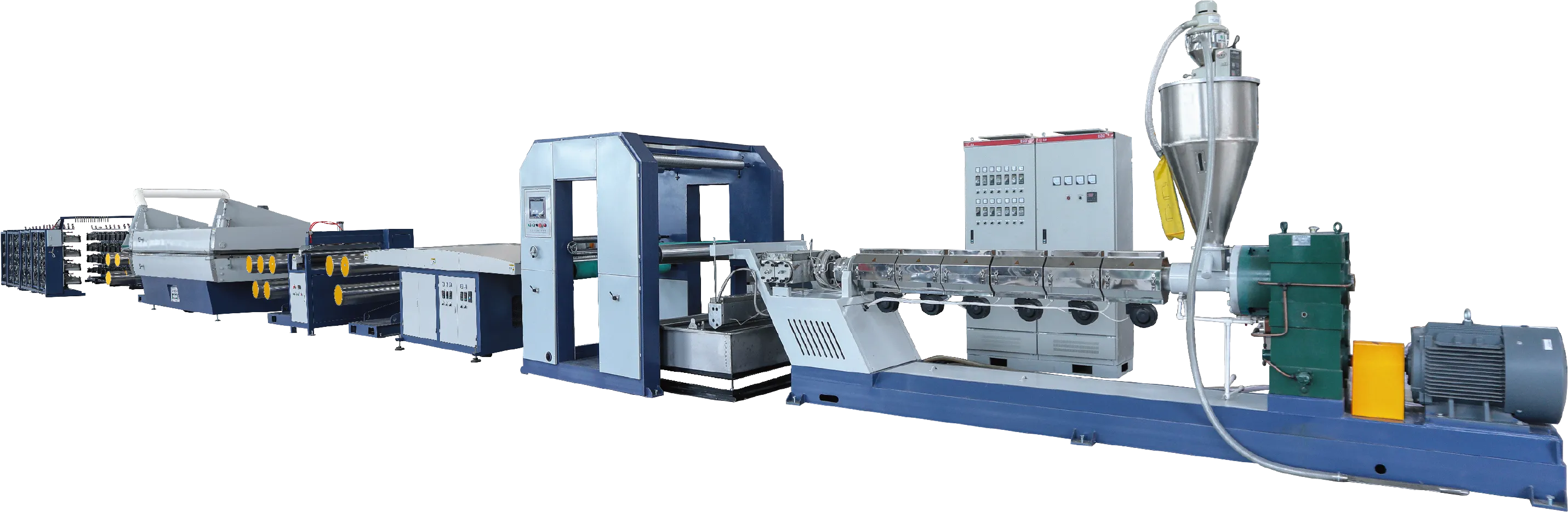
Plastic Flat Film Drawing Machine Architecture for Adaptive Customization
Modular unit design: Scalable integration of draw zones, annealing modules, and cooling systems
Today's plastic flat film drawing machines are built with modular designs that let manufacturers tweak their production setups as needed. Operators can swap out components like draw zones, annealing units, and cooling sections depending on what they need to produce that day. No need to tear everything apart just because specs change. Take it from someone who works on these machines daily: adding extra heat modules gives us more time to work with thick films during crystallization, while bigger cooling areas help speed things up when dealing with tricky materials such as LDPE or EVOH. The bottom line? These adaptable systems cut down retooling time by around two thirds compared to older fixed setup machines. That means faster transitions between different products, which is huge for keeping production schedules tight and meeting customer demands.
Material-specific configuration: Optimizing draw ratio, temperature profiles, and tension control for LDPE, PP, EVOH, and barrier co-extrusions
How materials behave determines what kind of machine settings we need. For LDPE, we generally work with draw ratios between 2.5:1 and 3:1 while keeping cooling rates carefully managed to prevent those unsightly stress whitening marks. Polypropylene works better when running speeds exceed 300 meters per minute, especially if we incorporate gradual tension changes throughout the process to combat neck-in issues. EVOH based barrier films present their own challenges requiring multiple stage annealing processes around 145 to 160 degrees Celsius just to maintain that critical oxygen barrier property. When dealing with co-extruded structures where different materials have varying elasticity levels, there's always a risk of layers coming apart. That's why modern production lines use sophisticated servo driven tension systems that keep force variations within plus or minus half a percent across every layer. Getting this kind of precision helps achieve thickness consistency below five microns which becomes absolutely necessary for clear, high performance packaging solutions that meet today's demanding standards.
Collaborative Customization Workflow: From Specification to Validation
Co-engineering process with end users: Joint specification, simulation-driven pre-validation, and ISO/IATF-compliant qualification
When implementing customized machinery, the process typically starts with what's called co-engineering between manufacturers and their clients' production staff. Together they work out all the functional specs during those long meetings everyone dreads but needs - things like how thin the material can be (within ±0.005 mm tolerance), what kind of bond strength is required between layers, and exactly how well it should block gases or liquids. All these details then get fed into computer models where engineers run simulations using 3D virtual prototypes and FEA tools. These digital tests show how materials will react under different stresses, strains at the edges, and temperature changes before anyone even touches metal. The simulation results help spot problems early on, like when EVOH tends to tear along edges during high tension processes. Fixing these issues upfront saves time and money later. After everything looks good in theory, there's still the final check against ISO/IATF standards for quality control. This means verifying that machines produce consistent results safely every single time. According to recent industry reports from Film Production Quarterly in 2023, companies adopting this comprehensive method see around a third fewer mistakes in custom builds than those sticking to old school spec sheets.
Performance trade-off analysis: Precision tension control vs. line speed (>350 m/min) in high-accuracy applications
Producing high accuracy films means finding the sweet spot between keeping tension stable at the micron level and pushing production speeds to their limits. When tension drifts beyond 0.3 Newtons, problems start showing up as misaligned layers and delamination issues in those multi-layer barrier films. Things get even trickier when production speeds hit around 350 meters per minute because vibrations kick in harder, making it tough for servos to keep up and causing all sorts of roller instability problems. Smart engineers tackle these challenges by building dynamic models that account for roller inertia, how long it takes servos to respond, and those pesky structural resonances. This approach lets them make specific improvements instead of tearing everything apart and starting from scratch. Take ceramic coated rollers for example they maintain tension within plus or minus 0.15 Newtons at an impressive 370 m/min speed according to a study published last year in Polymer Engineering Review. That's about 15% better than regular steel rollers, showing just how small component innovations can maintain flexibility in custom manufacturing while still pushing performance further than ever before.
Engineering Infrastructure Enabling Reliable Customization
Embedded FEA and thermal modeling for predictive validation of modified drawing units under operational load
Good customization really comes down to having solid predictive engineering in place rather than relying on testing after the fact. When we embed finite element analysis along with thermal modeling, we can actually see what happens to mechanical stress points, how things expand when heated, and predict how long parts will last under different conditions. This is super important for materials that react differently to heat, take polypropylene for instance which has high melt viscosity versus EVOH that tends to break down easily when exposed to elevated temperatures. The simulations basically recreate what happens in actual operation scenarios – think about forces reaching around 350 Newtons per square millimeter and temperature ranges going from 80 degrees Celsius all the way up to 220 degrees. By doing this ahead of time, engineers spot potential problems like warping, misalignment issues, or parts wearing out too quickly before anything gets put into production. Once these models are properly validated, they cut down on prototype testing by somewhere between 40% and 60%. They also make sure everything holds together even at those fast line speeds over 250 meters per minute while keeping thickness measurements within microns of each other. What used to be a process of guesswork and repeated attempts becomes something much more predictable and precise instead.
Operationalizing Customization: Speed, Standardization, and Scalability
Rapid retrofitting via ISO 15552-compliant interface kitsâachieving <72-hour field deployment for new configurations
Real world customization matters most when companies can actually implement it across multiple production lines fast enough to make a difference. Interface kits that meet ISO 15552 standards let manufacturers connect draw units, annealing chambers, and tension control modules without needing special machining work. This cuts down on site installations to less than three days instead of weeks. The prebuilt couplers come with things like electromechanical roller alignment systems, universal ports for sensors, and quick connects for cooling circuits. These components help switch between different materials such as polypropylene to EVOH while keeping tension within 0.1% even at speeds over 350 meters per minute. According to Packaging Digest from last year, these systems reduce setup mistakes by around 40%, which means getting back to full production capacity much quicker. For every hour saved in downtime, companies save about twelve thousand dollars. What we're seeing now is a new kind of customization approach where standard parts still offer tailored solutions without sacrificing either reliability or processing speed.
FAQ
What are the benefits of modular unit design in plastic flat film drawing machines?
Modular unit design allows manufacturers to customize production setups by swapping out components like draw zones and cooling sections, reducing retooling time and allowing faster product transitions, which helps in meeting tight production schedules.
How does material-specific configuration optimize production?
Material-specific configuration optimizes draw ratio, temperature profiles, and tension control based on material properties, ensuring higher precision and compliance with product standards for materials like LDPE, PP, and EVOH.
Why is the co-engineering process important in customized machinery?
The co-engineering process ensures that manufacturers and clients together define specifications, conduct simulations, and adhere to quality standards, reducing errors and enhancing custom build efficiency.