
 EN
EN



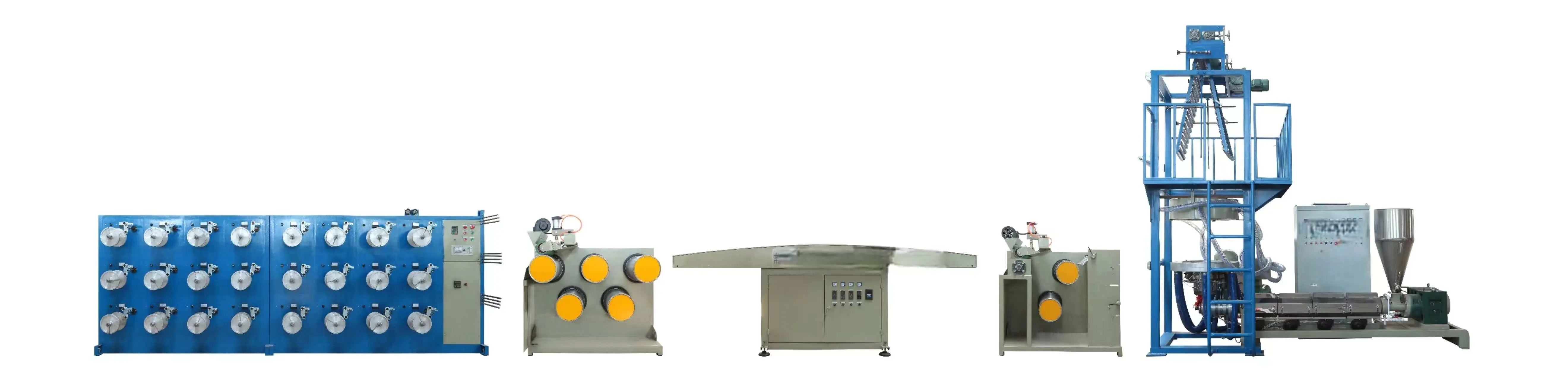
Plastic Flat Film Drawing Machine Advancements: Precision, Intelligence, and Sustainability
Modern plastic flat film drawing machines feature precision extrusion systems that deliver micron-level thickness consistency—critical for optical and imaging applications. Multi-layer co-extrusion technology now supports up to seven distinct functional layers (e.g., barrier, adhesive, protective) in a single pass, improving performance while streamlining production. Industry data shows these systems reduce material waste by 28% compared to conventional machines.
AI-Optimized Tension Control and Real-Time Thickness Monitoring
Industry 4.0 integration transforms quality assurance. Machine learning algorithms continuously analyze web tension dynamics across the line, automatically adjusting roller positions to sustain ±0.5% stability—even at speeds above 45 m/min. Concurrently, gamma-ray thickness sensors provide real-time feedback to control units, triggering instantaneous die-gap calibration when deviations exceed 2 microns. This closed-loop system prevents unplanned stoppages and preserves the optical clarity required for high-fidelity imaging applications.
Balancing High-Speed Output with Eco-Material Compliance
Today’s machines reconcile speed and sustainability: optimized cooling tunnels and advanced air-knife systems enable 40% faster output while cutting energy use by 18%. Equally important, they process over 15 biodegradable and recycled-content polymer formulations—including PCR resins at up to 30% blend ratios—without sacrificing extrusion stability or tensile strength, as confirmed by polymer science research.
From Machine to Media: How Plastic Flat Film Innovations Enable Next-Gen Imaging Applications
Translating Analog Flat-Film Aesthetics via Large-Format Digital Sensors
Advanced plastic flat film drawing machines produce substrates with ultra-uniform thickness (±0.5 μm tolerance) and precisely engineered micro-textured surfaces—enabling large-format digital sensors to replicate the organic grain structure and tonal gradation once exclusive to celluloid. This convergence allows cinematographers to achieve authentic analog aesthetics within fully digital workflows, eliminating photochemical processing without compromising creative intent.
Virtual Production Workflows Leveraging Stable, High-Clarity Flat Film Substrates
LED volume stages rely on dimensionally stable, high-clarity film substrates engineered for thermal resilience during extended shoots. With optical transmission exceeding 92%, these films ensure accurate color fidelity in real-time compositing—reducing post-production costs by 30% in documented virtual production deployments. Their resistance to moiré and hotspot reflections further validates how material-level innovation directly enables immersive, production-grade filmmaking.
Digital Integration and Lifecycle Extension for Flat Film Assets
Hybrid Scanning and AI-Driven HDR Mastering for Archival Flat Film
Hybrid optical-digital scanners capture analog film’s granular texture while applying AI models trained on material metadata—from extrusion temperature to polymer formulation—to distinguish intentional aesthetic qualities from age-related degradation. The result is faithful HDR mastering that recovers 40% more shadow detail than traditional methods, as reported in the Journal of Cultural Heritage (2023).
Cloud-Based Archiving and Predictive Restoration Using Film Material Metadata
Cloud-based preservation platforms ingest structural metadata generated during film production—including resin composition codes, thickness tolerances, and environmental exposure logs—to model degradation pathways. By correlating over 20 material attributes with observed aging patterns, these systems initiate restoration workflows proactively—cutting physical handling of fragile originals by 65% and extending functional lifespan through continuous, intelligent digital replication.
FAQ
What are the benefits of multi-layer co-extrusion technology in flat film drawing machines?
Multi-layer co-extrusion technology allows for up to seven distinct functional layers in a single pass, improving performance and reducing material waste by 28% compared to conventional machines.
How does AI-optimized tension control work in these machines?
AI-optimized tension control uses machine learning algorithms to continuously analyze web tension dynamics and adjust roller positions, maintaining stability even at high speeds.
Can these machines handle eco-materials?
Yes, today's machines can process over 15 biodegradable and recycled-content polymer formulations without compromising extrusion stability or tensile strength.
What role do plastic flat films play in imaging applications?
Plastic flat films, with ultra-uniform thickness and micro-textured surfaces, enable digital sensors to replicate analog film aesthetics, essential for advanced imaging and cinematography.
How are flat film assets preserved digitally?
Digital preservation involves cloud-based platforms that use material metadata for proactive restoration, extending the functional lifespan of film assets through intelligent replication.
Table of Contents
- Plastic Flat Film Drawing Machine Advancements: Precision, Intelligence, and Sustainability
- From Machine to Media: How Plastic Flat Film Innovations Enable Next-Gen Imaging Applications
- Digital Integration and Lifecycle Extension for Flat Film Assets
-
FAQ
- What are the benefits of multi-layer co-extrusion technology in flat film drawing machines?
- How does AI-optimized tension control work in these machines?
- Can these machines handle eco-materials?
- What role do plastic flat films play in imaging applications?
- How are flat film assets preserved digitally?