
 EN
EN


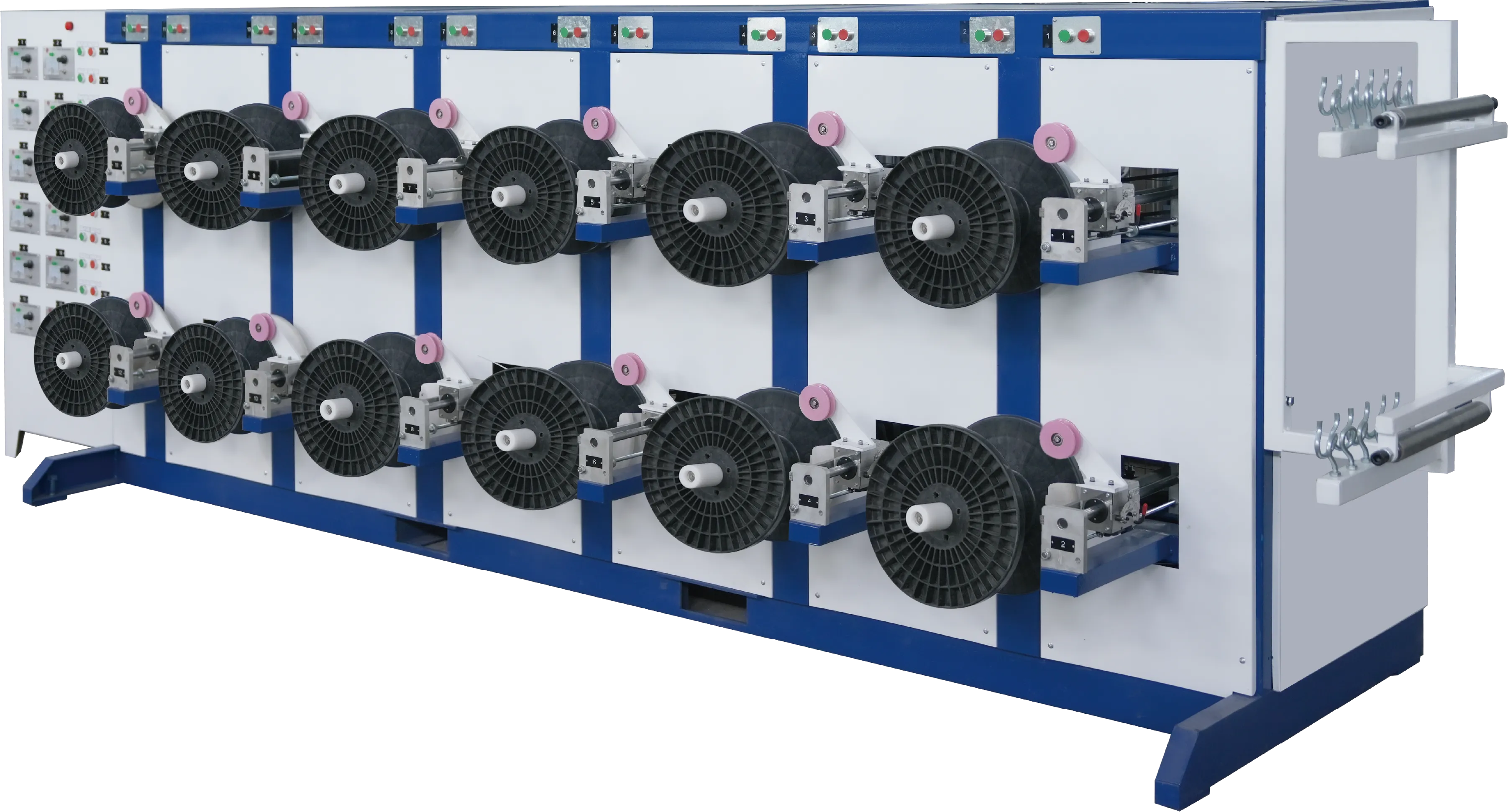
Tension Control Failures in Monofilament Extrusion Machines
Root Causes of Inconsistent Tension Leading to Line Breakage
Inconsistent tension in a monofilament extrusion machine most commonly stems from fluctuations in melt viscosity—driven by variations in screw speed, temperature profile, or raw material consistency. Even minor deviations alter polymer flow behavior, triggering abrupt tension spikes that exceed the filament’s yield strength. Wear on godet rollers or capstans introduces micro-slip, which accumulates into oscillatory tension patterns over time. Improper cooling bath temperature further destabilizes tension by altering the filament’s modulus during solidification, while contaminated regrind—especially with inconsistent bulk density—disrupts feed uniformity. External vibrations from adjacent equipment can also perturb the delicate tension equilibrium. Real-time monitoring and systematic logging of tension deviations are essential for identifying root-cause patterns before line breakage occurs.
Calibration and Adjustment Protocols for Monofilament Extrusion Machine Tension Systems
Calibration of the tension control loop must be performed after every 200 hours of runtime or following any material change. Begin by zeroing the dancer arm or load cell against a certified reference weight. Then run a calibration filament at nominal line speed and cross-check the controller output against an external tensiometer. Fine-tune PID gains to minimize overshoot and reduce settling time without inducing instability. For motor-driven pull rolls, verify torque limits align precisely with the target tension setpoint. Field trials confirm that properly tuned systems reduce breakage rates by up to 60%. All adjustments must be documented, and trend data reviewed weekly to detect early signs of drift—enabling proactive maintenance before unplanned downtime.
The Density–Tension Paradox: Why Excessive Tension Compromises Spool Integrity
Higher winding tension does not guarantee better spool integrity—it triggers the density–tension paradox. Excessive tension deforms inner filament layers under compression, causing “capstan crushing” and embedding residual stresses. These stresses relax post-winding, resulting in radial cracking or telescoping during unwinding. As a rule of thumb, winding tension should remain below 15% of the filament’s tensile strength. Over-tension accelerates core deformation and edge damage, reducing spool lifespan by 30% or more. Ultrasonic density profiling near the spool core provides non-destructive verification that winding parameters stay within safe mechanical limits.
Line Memory, Tangling, and Kinking During Rewinding
Achieving consistent behavior during monofilament rewinding hinges on managing molecular memory shaped during extrusion. As filament transitions from molten state to wound spool, its thermal history and path geometry directly influence downstream reliability—particularly susceptibility to tangles, kinks, and memory-induced coiling defects.
Thermal History and Polymer Relaxation: Drivers of Monofilament Memory Effects
Rapid cooling during extrusion traps amorphous polymer chains in high-energy metastable states, leading to pronounced residual coil memory. Line retention (LR) testing shows filaments cooled under stress profiles above their glass transition temperature (Tg) retain 40–55% more set curvature than those processed under optimized thermal conditions. Inline dielectric annealing—applied just before rewinding—effectively disrupts these locked-in configurations by enabling controlled relaxation. Facilities using preheating chambers report 30–40% fewer tangles, as reheating selectively reverses non-equilibrium conformations before winding pathways fix molecular orientation. According to polymer relaxation kinetics, shorter, targeted annealing durations deliver optimal results:
| Cooling Rate (°C/min) | Resultant Coil Memory (%) | Recommended Mitigation |
|---|---|---|
| Extremely High | 82–88 | Inline preheat chamber |
| Industry Standard | 47–53 | Incremental tension tuning |
| Extended Equilibrium | <36 | Dielectric relaxation |
Kink Formation Mechanisms and Preventive Guide Geometry Optimization
Kinks arise when localized compressive forces during spool traversal exceed the filament’s yield threshold—typically at guide points where bending angles concentrate stress. Research confirms that over 67% of kinks originate at contact zones with guide rollers whose curvature ratio (roller radius ÷ filament diameter) falls below manufacturer-recommended minimums. Insufficient radii focus deformation beyond elastic recovery limits, especially in semi-crystalline polymers like PET, permanently disrupting crystalline alignment. Wider guide radii distribute compressive loads more uniformly across the wrap angle, preserving structural integrity. Surface friction also plays a key role: ceramic-coated guides reduce tangling rates by 22% compared to standard metallic variants. Optimized low-impact guide geometry—designed for minimal path disturbance—proves especially effective during rapid acceleration, where asynchronous containment events otherwise trigger spiraling surface degradation.
Mechanical Misalignment and Dynamic Instability in Spooling Systems
Guide and Traverse Alignment Errors and Their Impact on Surface Quality
Misaligned traverse guides or roller axes introduce lateral forces that distort filament trajectory, generating tension fluctuations and surface abrasion—including micro-scratches, flattening, or edge roughness. For monofilament extrusion machine operators, inconsistent spool edges are often the first visible indicator. Common causes include thermal expansion mismatch between components, post-maintenance assembly errors, or gradual baseplate settlement. Correction requires precision alignment: measure current shaft positions, calculate required angular and parallel offset corrections, then execute adjustments methodically using laser alignment tools or dial indicators.
Vibration-Induced Core Slippage at High-Speed Rewind: Diagnosis and Damping Solutions
At high rewind speeds, even subtle vibrations can overcome core holding torque, causing slippage that manifests as loose windings or telescoping layers. This dynamic instability frequently originates from misaligned shafts or unbalanced rotating components, generating destructive resonance. Diagnostically, rhythmic pattern defects on the spool surface signal such vibration coupling. Effective mitigation includes rebalancing rotating assemblies, installing elastomeric vibration-dampening mounts, and verifying core chuck pressure is sufficient for the spool’s rotational inertia. A stable core remains foundational—not only for consistent tension but for achieving repeatable, high-integrity spool geometry.
FAQ
What causes tension failures in monofilament extrusion machines?
Tension failures are typically caused by fluctuations in melt viscosity, worn equipment like godet rollers, improper cooling temperatures, contaminated regrind materials, or external vibrations.
How often should tension control systems be calibrated?
Tension control systems should be calibrated after every 200 hours of runtime or after a material change to ensure consistent performance.
What is the density–tension paradox in winding?
The density–tension paradox occurs when excessive winding tension compresses inner filament layers, causing stress-related defects like radial cracking and reducing spool lifespan.
How can manufacturers reduce kink formation during rewinding?
Kink formation can be reduced by optimizing guide geometry, using wider radii at contact points, minimizing localized compressive stress, and using ceramic-coated guides for lower surface friction.
What are the signs of misalignment in spooling systems?
Signs of misalignment include tension fluctuations, inconsistent spool edges, surface abrasions like scratches, and defects caused by lateral forces during operation.