
 EN
EN


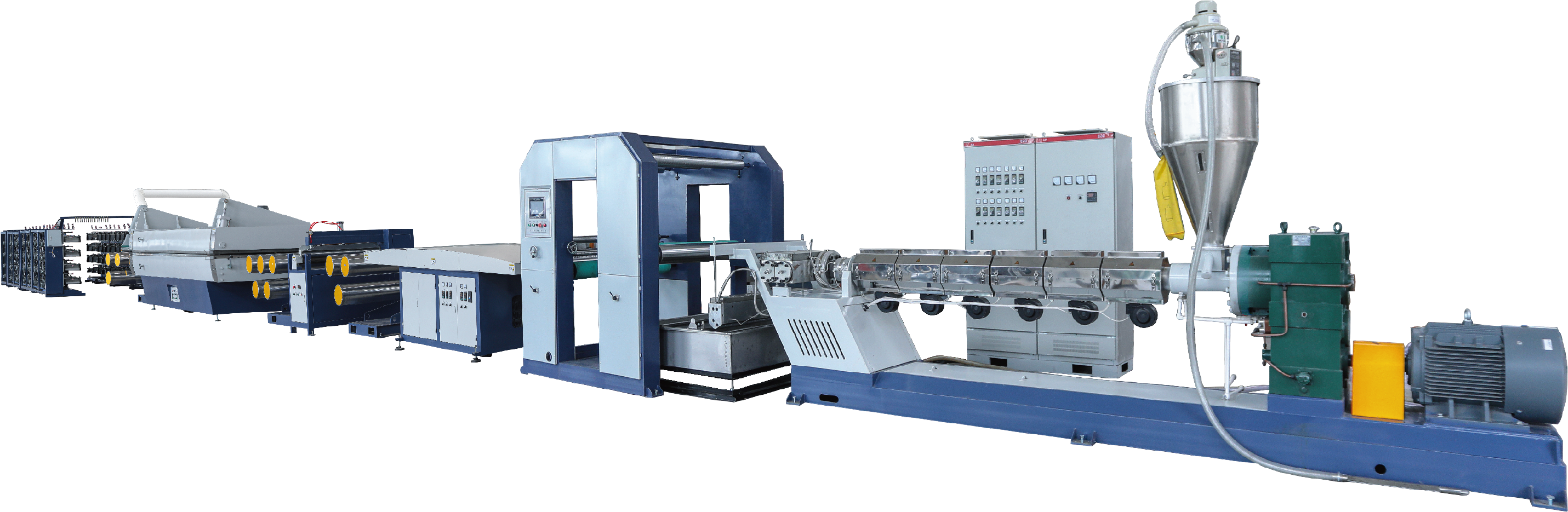
Limitations of Standard Granulators in Specialized Applications
Standard granulators are engineered for homogeneous, clean plastic streams—and falter in specialized production environments. When tasked with mixed or heavily contaminated feedstocks, they suffer frequent blockages, inconsistent particle sizing, and unplanned downtime. Their rigid feed systems and fixed cutting geometries cannot accommodate variations in material density, shape, or moisture content. This inflexibility increases operational risks: thermal degradation from friction-induced overheating, excessive dust generation compromising workplace safety, and jamming under high-throughput, non-uniform conditions—common in advanced recycling lines. For a plastic recycling granulation unit to deliver consistent, high-quality regrind in demanding applications, it must move beyond generic designs to resolve these core mechanical and process limitations.
Key Customization Levers for Plastic Recycling Granulation Units
A purpose-built plastic recycling granulation unit addresses real-world complexity through targeted engineering—not feature stacking. Three interdependent levers drive performance: the material flow path, cutting geometry, and thermal management system. Each lever is calibrated to the physical behavior of the target feedstock, ensuring reliability, output consistency, and material integrity.
Material-Specific Feed and Cutting Systems for Mixed or Contaminated Plastics
The feed and cutting assembly must match the material—not the other way around. Thin film, for instance, requires a ram-fed hopper to prevent air entrapment and bridging; thick-wall pipe or solid lumps demand tilt-feed or manual troughs to ensure controlled entry. Likewise, rotor and blade design follows material physics: an open rotor with staggered knives delivers high impact resistance for tough, flexible scrap, while a solid or closed rotor applies greater shear force for dense, rigid materials. These adaptations eliminate common failure points—bridging, jamming, and size variation—without relying on operator intervention or post-processing sorting.
Precision Temperature & Throughput Control to Prevent Thermal Degradation
Thermal degradation is not inevitable—it’s a design gap. Standard units generate uncontrolled friction heat, causing low-melt polymers and engineering resins to smear, discolor, or char inside the chamber. A custom solution integrates precision thermal management: water-cooled cutting chambers maintain stable operating temperatures; externally adjustable blades preserve optimal cutting clearance as components expand; and variable-frequency drives (VFDs) synchronize feed rate, rotor speed, and cooling capacity in real time. This coordination enables high throughput without sacrificing polymer integrity—ensuring regrind retains its melt flow index, tensile strength, and color stability for downstream extrusion or molding.
Design-to-Outcome: Matching Custom Granulator Specifications to Production Goals
Customization gains value only when specifications map directly to measurable outcomes. A lab-tested blade angle means little if it doesn’t translate to 95%+ particle uniformity at 2,000 kg/h on the production floor. Therefore, every design decision—from feed throat dimensions and screen aperture size to rotor inertia and motor torque curve—must be traceable to a defined operational target: target throughput, maximum allowable fines, required bulk density, or allowable temperature rise per pass. This outcome-first approach prevents over-engineering, avoids costly retrofits, and accelerates commissioning by anchoring validation to real production data—not theoretical benchmarks.
Scalability Pathways: From Lab-Scale R&D to High-Capacity Plastic Recycling Granulation Unit Deployment
Scaling a custom granulation solution demands empirical validation—not extrapolation. A phased deployment de-risks investment:
- Lab-scale units (≤50 kg/h) validate blade geometry, temperature thresholds, and screen retention rates on representative batches—identifying critical wear patterns and thermal limits early.
- Pilot-scale units (200–500 kg/h) replicate line integration, including upstream shredder synchronization and downstream conveying, confirming that throughput scaling doesn’t compromise particle distribution or introduce vibration-induced misalignment.
- Full-capacity deployment leverages validated parameters to configure motors, gearboxes, and cooling systems—minimizing startup delays and avoiding “surprise” bottlenecks. This bench-to-floor progression ensures scalability is built into the design, not bolted on after failure.
ROI and Risk Mitigation in Custom Granulator Investment
While upfront cost exceeds that of standard units, a well-specified custom plastic recycling granulation unit delivers measurable ROI within 12–24 months for most medium-scale operations. Benefits compound: tailored feed systems reduce energy use by up to 15%, optimized cutting geometry improves yield by 8–12%, and integrated thermal control cuts rework by eliminating heat-damaged regrind. Risk mitigation rests on three pillars:
- Performance guarantees tied to throughput, particle size distribution (PSD), and temperature limits—not just uptime;
- Modular architecture, enabling future upgrades (e.g., rotor swaps or cooling circuit expansion) without full-system replacement;
- Feedstock-specific service contracts, covering wear-part replacements calibrated to actual contaminant load and material abrasiveness—not generic OEM schedules.
To quantify value, recyclers should model five- and ten-year scenarios using real operational data: current scrap rejection rates, labor hours spent clearing jams, energy meter readings per ton, and historical downtime costs. Delaying customization based solely on capital cost often magnifies losses—inefficient regrind, off-spec batches, and reactive maintenance erode margins faster than the initial investment. A strategic, data-driven upgrade strengthens both financial resilience and technical leadership in evolving recycling markets.
FAQ
Why do standard granulators struggle with heavily contaminated plastics?
Standard granulators are designed for clean streams of plastic with consistent properties. When faced with mixed or contaminated feedstocks, their rigid geometries and feed systems cannot handle material variations, leading to issues such as jamming, uneven particle sizes, and thermal degradation.
How does material-specific customization help improve granulation performance?
Material-specific customization tailors feed systems and cutting geometries to the physical properties of the target plastics, ensuring reliable and consistent operation without requiring manual interventions or additional post-processing.
What is the role of thermal management in preventing polymer degradation?
Precision thermal management prevents overheating and smearing by maintaining stable cutting chamber temperatures, enabling efficient granulation without compromising material integrity like melt flow index and tensile strength.
How does scalability impact the investment process for custom granulators?
Scalability ensures that the granulator design can transition smoothly from lab-scale testing to full-capacity deployment without sacrificing operational performance. This phased approach minimizes risks and validates the system before large-scale investment.
Table of Contents
- Limitations of Standard Granulators in Specialized Applications
- Key Customization Levers for Plastic Recycling Granulation Units
- Design-to-Outcome: Matching Custom Granulator Specifications to Production Goals
- ROI and Risk Mitigation in Custom Granulator Investment
-
FAQ
- Why do standard granulators struggle with heavily contaminated plastics?
- How does material-specific customization help improve granulation performance?
- What is the role of thermal management in preventing polymer degradation?
- How does scalability impact the investment process for custom granulators?