
 EN
EN



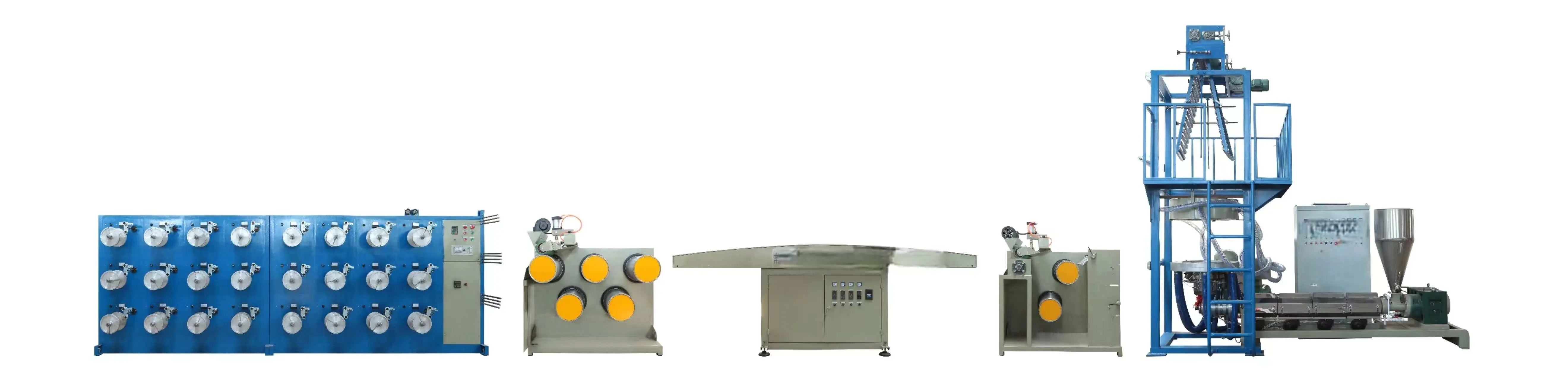
How Plastic Recycling Granulation Units Transform Waste into Consistent PCR Feedstock
Core Mechanics: Size Reduction, Contaminant Removal, and Granule Uniformity Control
A modern plastic recycling granulation unit performs three critical steps to turn post-consumer waste into reliable PCR feedstock. First, size reduction cuts bulky items—such as bottles, containers, and film—into small, uniform flakes or chips. This increases surface area for efficient cleaning and melt homogeneity. Second, integrated contaminant removal systems eliminate labels, adhesives, metals, and residual contents using multi-stage washing, air classifiers, and density-based separators. Third, precise control over screen size, rotor speed, and knife geometry ensures granule uniformity—critical for stable feeding into extruders and injection molders. Consistent particle dimensions reduce process variability, improve melt flow, and support stringent quality requirements for packaging applications. Without this level of mechanical refinement, PCR would retain impurities and irregular shapes that compromise strength, clarity, and regulatory compliance.
Granulator vs Shredder: Why Precision Granulation Is Critical for Bottle-to-Bottle Recycling
Granulators differ fundamentally from shredders in output quality and functional purpose. Shredders tear material into large, irregular fragments with inconsistent geometry—suitable for initial volume reduction but inadequate for high-value recycling. Granulators cut with rotating knives against a fixed bed knife, producing clean, dimensionally controlled granules. This precision is essential for bottle-to-bottle recycling, where PCR must match the molecular weight distribution and rheological behavior of virgin PET or HDPE. Tight tolerance control also minimizes fines and dust, which can clog screen packs, degrade during extrusion, and introduce carbonization points. Consistent granule shape further reduces energy demand during melting and improves dispersion of additives like stabilizers or colorants. As a result, many MRFs now integrate granulation units directly after sorting and washing—creating a closed-loop, ready-to-process feedstock that meets food-grade and pharmaceutical packaging standards. The choice between shredding and granulation determines whether recycled material qualifies for premium applications—or remains relegated to downcycled commodities.
Regulatory and Systemic Drivers Accelerating Adoption of Plastic Recycling Granulation Units
EPR Schemes, Plastic Tax Policies, and Minimum Recycled Content Mandates
Governments worldwide are tightening regulations to accelerate plastic circularity—and granulation units sit at the operational nexus of compliance. Extended Producer Responsibility (EPR) schemes shift the financial and logistical burden of end-of-life management onto manufacturers, incentivizing investments in recyclable design and high-fidelity reprocessing infrastructure. Plastic taxes on virgin packaging—like those in the UK and Spain—raise the cost differential between virgin and recycled resin, making PCR more competitive. Meanwhile, binding minimum recycled content mandates—such as the EU’s 30% requirement for PET beverage bottles by 2030—create guaranteed demand for consistent, contaminant-free feedstock. These policies don’t just increase PCR volumes; they raise the bar on quality. Converters can no longer accept variable flake—regulatory targets require granulate that meets strict spectroscopic, rheological, and contamination thresholds. That demand is driving rapid adoption of plastic recycling granulation units across Europe, North America, and Southeast Asia.
Circular Economy Infrastructure: Integrating Granulation Units into MRFs and PCR Hubs
Beyond regulation, systemic shifts in waste infrastructure are embedding granulation into the core of circular supply chains. Modern material recovery facilities (MRFs) increasingly incorporate dedicated granulation lines downstream of sorting and washing—converting sorted bales into uniform, extruder-ready granulate onsite. This integration eliminates double-handling, reduces transport-related degradation, and shortens time-to-market for PCR. Similarly, centralized PCR hubs—often co-located with regional collection networks—are deploying high-throughput granulation units to serve multiple converters, lowering per-ton capital and operational costs. The convergence of policy mandates and infrastructure evolution creates a self-reinforcing cycle: regulatory targets drive demand for certified PCR, which requires consistent granulate supply, which in turn justifies investment in integrated granulation systems that improve yield, purity, and scalability. As a result, granulation is transitioning from an optional finishing step to a foundational capability in next-generation recycling infrastructure.
Sustainability and Operational Advantages of Modern Plastic Recycling Granulation Units
Energy Efficiency, Throughput Optimization, and Reduced Logistics Footprint for PCR Supply Chains
Modern plastic recycling granulation units deliver measurable sustainability and operational gains. Advanced motor drives, optimized hydraulic systems, and heat recovery integrations have reduced specific energy consumption by 20–30% compared to legacy models—directly lowering operating costs and the carbon intensity of PCR production. Throughput has also increased significantly: high-capacity units now reliably process over 1 ton per hour while maintaining tight dimensional tolerances, enabling facilities to scale PCR output without proportional increases in electricity use or floor space. Logistically, locating granulation units near MRFs, collection centers, or even industrial parks compresses the supply chain—eliminating long-haul transport of low-density, bulky scrap. Mobile and modular granulation systems extend this advantage further, allowing on-site processing at supermarkets, bottling plants, or municipal depots. When combined with closed-loop system design and real-time process monitoring, these units help transform PCR from a volatile commodity into a predictable, high-performance input—making plastic recycling not just environmentally necessary, but economically resilient.
FAQs
What is PCR feedstock?
PCR feedstock refers to Post-Consumer Recycled material, processed plastic waste that manufacturers use as input for creating new products while meeting sustainability requirements.
Why are granulators preferred over shredders?
Granulators offer precision in cutting material into uniform, controlled granules, which is necessary for applications like bottle-to-bottle recycling, unlike shredders that create irregular fragments.
How do granulation units comply with regulations?
Granulation units produce consistent and contaminant-free granulate, meeting regulatory mandates like extended producer responsibility, plastic taxes, and minimum recycled content percentages.
What benefits do mobile and modular granulation systems offer?
Mobile and modular granulation systems allow on-site processing, reducing logistics costs, transport-related degradation, and supporting rapid PCR production.