
 EN
EN



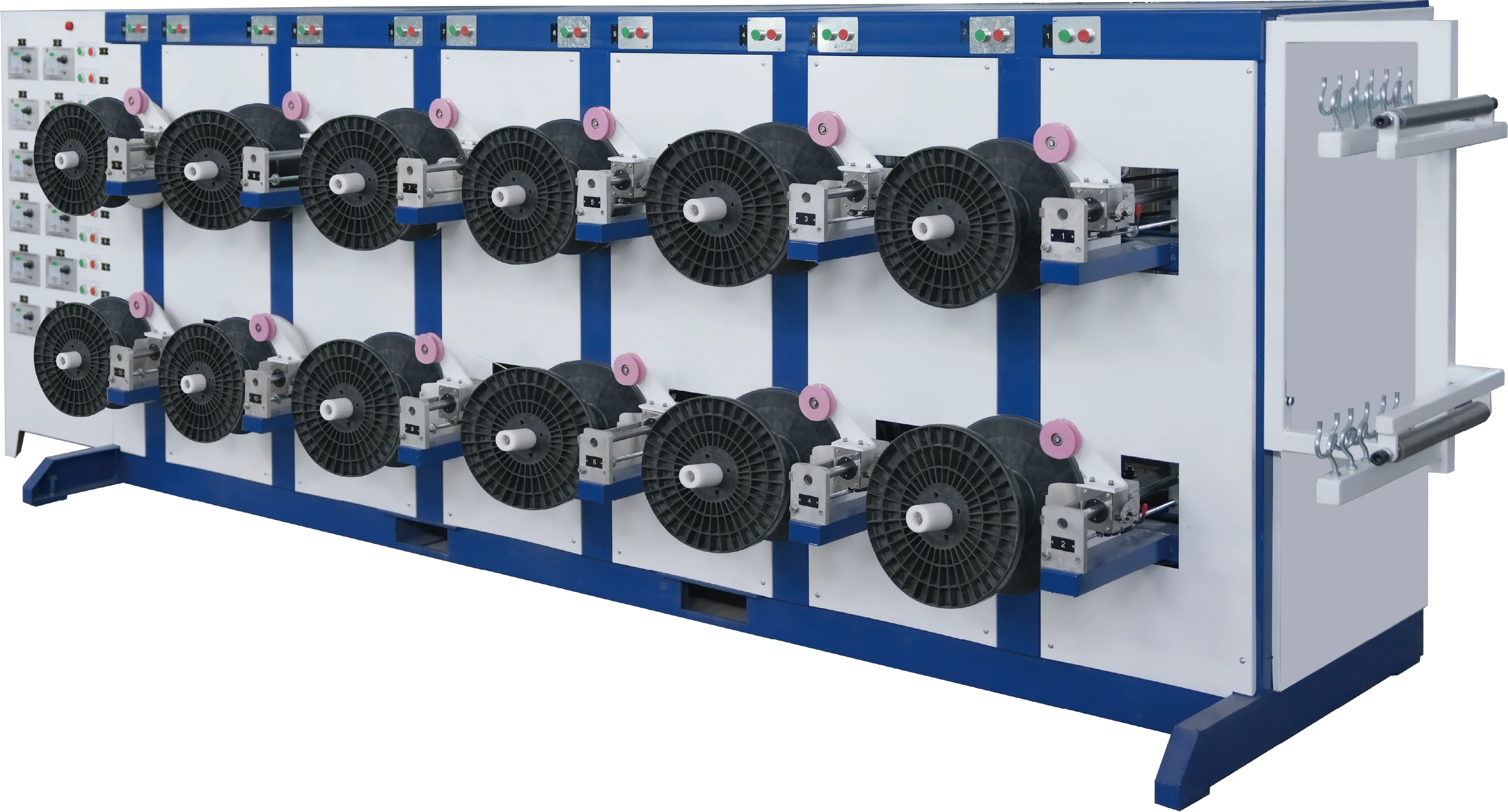
Monofilament Strapping Machines: The Efficiency Catalyst for High-Speed Packaging Lines
Bottlenecks in Manual and Conventional Strapping: Why Throughput Suffers
Manual strapping is a primary source of line slowdown—each bundle requires an operator to wrap, tension, and seal the strap by hand, consuming 20–30 seconds per unit. At scale, this labor-intensive step becomes a hard throughput bottleneck. Semi-automatic PP or PET strapping machines improve speed but still suffer from inconsistent tension control, resulting in loose bundles that trigger rework. Frequent manual interventions reduce overall equipment effectiveness (OEE) to just 60–70%, inflating labor costs and delaying shipments. For operations targeting high-speed packaging, automation isn’t optional—it’s foundational.
Superior Tensile Strength and Elastic Recovery of Monofilament vs. PP/PET
Monofilament strap—produced via dedicated monofilament extrusion—delivers significantly higher tensile strength and elastic recovery than standard PP or PET alternatives. Unlike PP, which deforms permanently under load, or PET, which can fracture under impact, monofilament absorbs shock and rebounds to maintain secure tension. Its elastic recovery allows it to dampen vibration during transit and return to near-original tension—retaining ~90% of applied force after 24 hours, versus less than 70% for PP. This performance eliminates retracking, reduces damage claims, and transforms load security into a predictable, repeatable outcome.
Precision Tension Control and Load Security: Eliminating Variability with Automation
Manual strapping introduces unavoidable tension variability—even skilled operators produce inconsistent results, risking loose straps, product damage, or shipment rejection. Closed-loop feedback systems resolve this by continuously measuring strap tension and making real-time micro-adjustments via servo-driven motors. The result is identical, repeatable strapping force on every package—regardless of operator fatigue, ambient conditions, or minor material fluctuations.
How Closed-Loop Feedback Systems Ensure Consistent, Repeatable Strapping Force
Tension sensors monitor force in real time; when deviation from the preset target occurs, the controller instantly adjusts motor speed or braking pressure. Operating in milliseconds, this loop adapts seamlessly to changes in strap thickness, temperature, or feed rate—unlike open-loop systems reliant on static calibration. The outcome is dramatically lower strap breakage, zero retightening rework, and uniform load integrity. When paired with monofilament strap, closed-loop control fully leverages its elasticity and strength—turning raw material consistency into end-to-end packaging reliability.
Material Flexibility and Integration Readiness: Supporting Multi-SKU Production
Adaptive Feed Mechanisms for Monofilament, PET, and Polypropylene Straps
Modern packaging lines require agility across SKUs, load types, and sustainability requirements. Adaptive feed mechanisms enable automatic, tool-free transitions between monofilament, PET, and polypropylene straps—adjusting tension profiles, roller pressure, and feed rates on the fly. Intelligent sensors detect material thickness and elasticity, switching configurations in seconds without mechanical recalibration. This capability cuts changeover time by 40% (Packaging Efficiency Report 2024) and sustains uninterrupted production flow—even when integrating outputs from a monofilament extrusion machine alongside other strap sources. Crucially, it also supports recyclable and bio-based materials, aligning with tightening environmental regulations.
Total Cost of Ownership: Calculating ROI Beyond Speed — Safety, Uptime, and Labor Savings
Quantifying Hidden Costs: Retracking, Damage Claims, and Downtime from Inconsistent Strapping
The true ROI of monofilament strapping lies not just in speed—but in eliminating costly, chronic inefficiencies tied to inconsistent tension. Poor load security triggers avoidable downstream failures:
- Retracking labor: Operators spend 15–20% of shift time re-securing loads due to tension loss (Industry Watch 2024)
- Damage claims: Insecure strapping contributes to an average $740k annual loss in mid-sized warehouses (Ponemon Institute, 2023)
- Unscheduled downtime: Strap-related stoppages cost automotive parts facilities $2,500/hour in lost output
Automated tension control with monofilament reduces these losses by 60–75% versus manual methods—and slashes ergonomic injury risk from handling unstable loads.
| Cost Category | Manual Strapping | Automated Monofilament | Reduction |
|---|---|---|---|
| Retracking Labor | 18.7 hrs/week | 2.1 hrs/week | 89% |
| Product Damage | $12k/month | $1.8k/month | 85% |
| Downtime Incidents | 3.4 weekly | 0.2 weekly | 94% |
Data reflects composite averages from third-party packaging audits across 47 facilities.
FAQs
What is monofilament strapping?
Monofilament strapping is a type of strap made from a single continuous filament, offering superior tensile strength and elastic recovery compared to polypropylene (PP) or polyethylene terephthalate (PET) strapping.
How does a closed-loop feedback system improve strapping consistency?
A closed-loop feedback system constantly measures strap tension and adjusts in real-time using servo-driven motors, ensuring the same strapping force on every bundle.
What are the cost benefits of automated monofilament strapping?
Automated monofilament strapping reduces retracking labor by 89%, product damage by 85%, and downtime incidents by 94%, drastically cutting overall costs while improving operational efficiency.
Can monofilament strapping machines handle different types of straps?
Yes, modern monofilament strapping machines feature adaptive feed mechanisms, which enable seamless transitions between monofilament, PET, and polypropylene straps without manual recalibration.
Table of Contents
-
Monofilament Strapping Machines: The Efficiency Catalyst for High-Speed Packaging Lines
- Bottlenecks in Manual and Conventional Strapping: Why Throughput Suffers
- Superior Tensile Strength and Elastic Recovery of Monofilament vs. PP/PET
- Precision Tension Control and Load Security: Eliminating Variability with Automation
- Material Flexibility and Integration Readiness: Supporting Multi-SKU Production
- Total Cost of Ownership: Calculating ROI Beyond Speed — Safety, Uptime, and Labor Savings
- FAQs