
 EN
EN



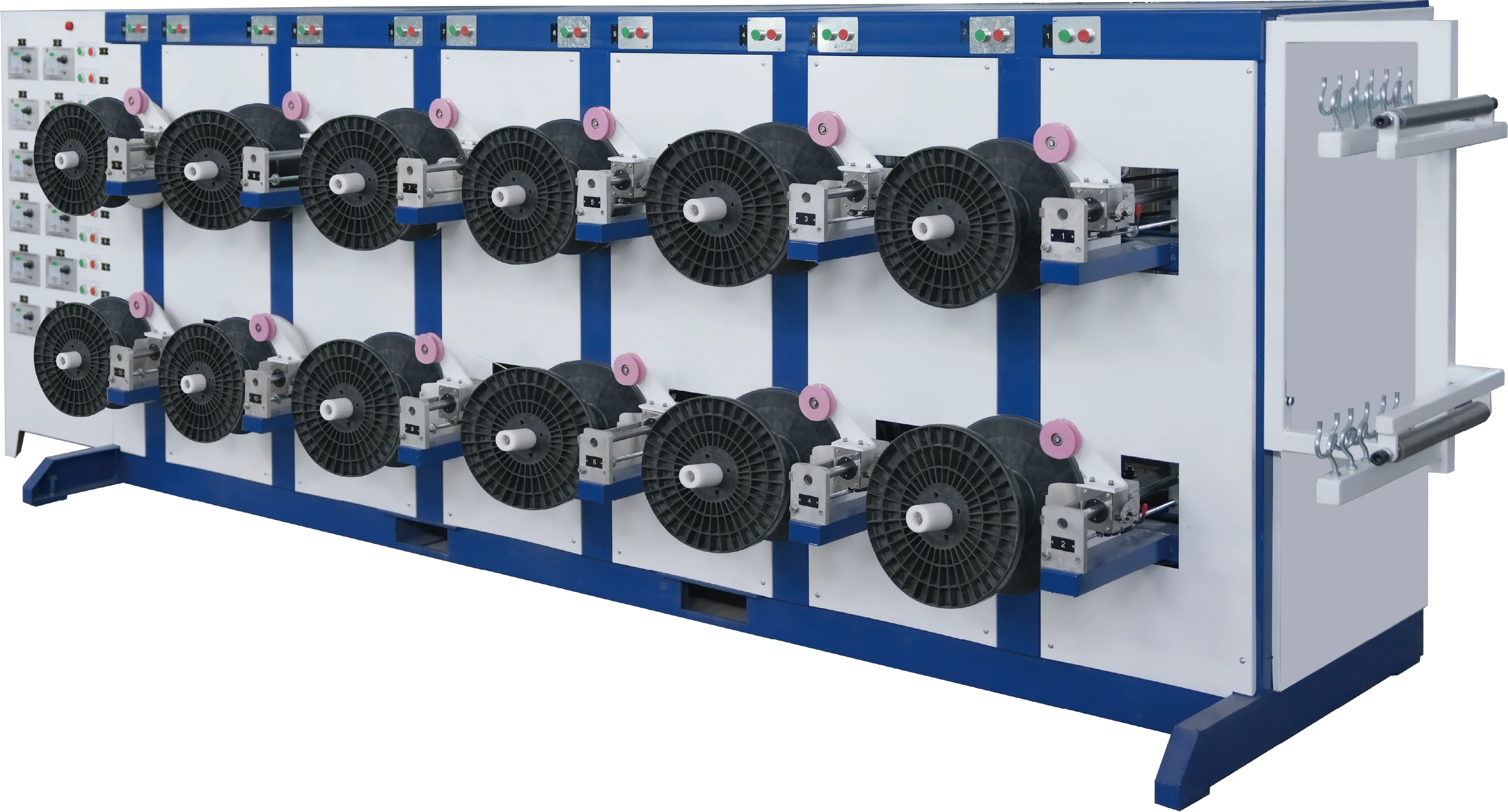
Monofilament Extrusion Machine: Precision Engine for Industrial-Strength Output
Melt Delivery & Die Design for Stable Heavy-Denier (>1100 dtex) Extrusion
Precision-engineered melt delivery systems are foundational for extruding heavy-denier monofilaments exceeding 1100 dtex. Temperature-controlled barrels maintain polymer viscosity within ±2°C tolerance zones, while specialized screw geometries prevent thermal degradation during plasticization. The die design directly governs filament stability: converging flow channels with optimized land lengths suppress melt fracture and ensure consistent cross-sectional integrity. For industrial-grade output, hardened tool steel dies with diamond-like carbon (DLC) coatings withstand abrasive polymers at extrusion pressures up to 5,000 psi. This integrated mechanical precision enables continuous production of monofilaments with diameter variation below 0.5%—meeting stringent aerospace and marine rope specifications.
Real-Time Draw Ratio Control to Ensure Tenacity Uniformity Across Batch Runs
Modern monofilament extrusion machines employ closed-loop control systems that dynamically adjust draw ratios during processing. Laser micrometers measure filament diameter at 200 Hz, feeding real-time data to servo-driven godet wheels that instantaneously compensate for tension fluctuations. This active modulation maintains draw ratios within ±1.5% tolerance across runs—critical for achieving uniform tenacity exceeding 8 g/denier in nylon monofilaments. Advanced algorithms leverage historical batch data to anticipate and correct for polymer lot variability, reducing inter-batch tenacity deviation to under 2%. Such control eliminates downstream processing defects and ensures industrial webbing and filtration media meet ISO 9001 tensile consistency requirements.
Post-Extrusion Processing: Quenching, Drawing, and Structural Optimization
Controlled Quenching Rates to Maximize Crystallinity and Tensile Consistency
Rapid, precisely calibrated quenching is essential to optimize molecular structure and mechanical performance. Water quenching at temperatures 15–25°C below the polymer’s crystallization point accelerates chain alignment, increasing crystallinity by 40–60% compared to ambient cooling—boosting tensile strength above 8.5 g/d while holding diameter tolerance to ±0.02 mm. In UHMWPE, controlled quenching minimizes amorphous domain formation, directly reducing tenacity variance across batches by 12%.
Steam Drawing of Nylon Monofilament: Balancing Tenacity Gain and Ductility Retention
Steam-assisted drawing at 120–140°C enables targeted molecular orientation in nylon monofilament without compromising ductility. At optimal draw ratios of 4:1 to 5:1, tenacity increases to 9.2 cN/dtex while retaining 18–22% elongation at break—critical for impact-resistant applications like safety netting and dynamic load-bearing webbing. Integrated humidity monitoring prevents hydrolytic degradation during steam exposure, maintaining moisture content below 2.5% to ensure dimensional stability under sustained load.
Material-Specific Protocols: Optimizing Production for Nylon, UHMWPE, and Specialty Polymers
Comparative Performance: Nylon vs. UHMWPE in Tensile Strength, Chemical Resistance, and UV Stability
Industrial monofilament applications require deliberate material selection between nylon and ultra-high molecular weight polyethylene (UHMWPE). UHMWPE delivers superior tensile strength—often exceeding 3 GPa—making it ideal for high-load uses such as marine cables and safety harnesses. Nylon offers robust performance at lower cost but typically caps at ~1 GPa. Chemically, UHMWPE exhibits near-inert behavior against acids, alkalis, and solvents, whereas nylon remains vulnerable to hydrolysis and aggressive industrial chemicals. UV resistance presents a tradeoff: nylon degrades rapidly without stabilizers, while UHMWPE retains baseline integrity but still benefits from UV inhibitors for long-term outdoor service life.
| Property | Nylon | UHMWPE |
|---|---|---|
| Tensile Strength | High (0.5–1 GPa) | Very high (2–3 GPa+) |
| Chemical Resistance | Moderate (hydrolysis risk) | Excellent (broad inertness) |
| UV Stability | Poor (requires heavy additives) | Moderate (additives recommended) |
Quality Assurance and Process Validation for Industrial Monofilament Compliance
Industrial monofilament production demands rigorous quality assurance to ensure reliability in mission-critical applications—from medical sutures to heavy-duty filtration systems. Process validation follows a three-phase framework: Installation Qualification (IQ) confirms proper setup of the monofilament extrusion machine and auxiliary systems; Operational Qualification (OQ) verifies stable performance across defined operating parameters; and Performance Qualification (PQ) demonstrates reproducible batch-to-batch consistency under routine production conditions. Supported by statistical process control (SPC), this methodology ensures compliance with ISO 13485 and ASTM standards while maintaining tensile strength variance below 5%. Real-time diameter monitoring and automated defect detection enable near-zero ppm defect rates, with full traceability—from polymer melt viscosity and draw ratio to winding tension—documented for every production run.
FAQ
What is the purpose of a monofilament extrusion machine?
A monofilament extrusion machine is used to produce industrial-strength monofilaments with high precision, ensuring consistency in diameter and tenacity for applications such as marine ropes and filtration media.
How does the machine ensure uniform tenacity?
The machine utilizes real-time draw ratio control with laser micrometers and servo-driven godet wheels to maintain tenacity consistency across batch runs.
What are the benefits of controlled quenching rates?
Controlled quenching rates optimize molecular structure and mechanical performance by accelerating chain alignment, increasing crystallinity, and minimizing amorphous domain formation.
How does UHMWPE compare to nylon?
UHMWPE offers superior tensile strength and chemical resistance compared to nylon, making it ideal for high-load applications. However, it comes at a higher cost.
Table of Contents
- Monofilament Extrusion Machine: Precision Engine for Industrial-Strength Output
- Post-Extrusion Processing: Quenching, Drawing, and Structural Optimization
- Material-Specific Protocols: Optimizing Production for Nylon, UHMWPE, and Specialty Polymers
- Quality Assurance and Process Validation for Industrial Monofilament Compliance