
 EN
EN



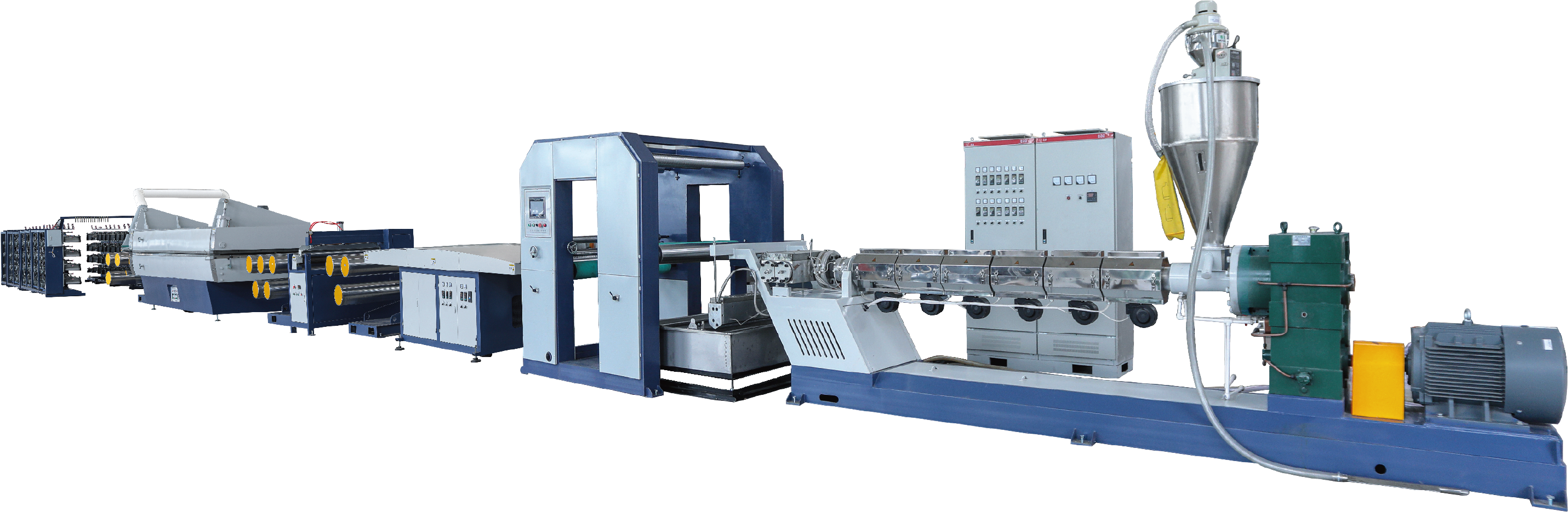
Precision Tension Control: Eliminating Variability in Strapping Film Production Line Performance
The Manual Gap: How Human Intervention Causes Tension Drift and Placement Inconsistency
Manual tension adjustments introduce unavoidable variability—operators cannot replicate force settings with precision across shifts, resulting in tension drift of up to ±15% (IndustryWatch 2024). This instability causes film slippage, edge misalignment, and thickness deviations, leading to wrinkles or weak seals in approximately 2% of rolls. Frequent interventions also disrupt throughput, contributing to 7–12% material waste and unplanned downtime.
Closed-Loop Feedback Systems: Real-Time Monitoring and Micro-Adjustment of Tension Parameters
Closed-loop feedback systems (CLFS) replace manual intervention with continuous, sensor-driven control of film elasticity and roll dynamics. Load cells monitor real-time tension while servo-driven nip rolls execute micro-adjustments within 50ms—maintaining stability within ±1.5% tolerance. By autonomously synchronizing force, speed, and positioning, CLFS reduces material defects by 40% and increases annual output capacity by 19%, directly addressing the root causes of inconsistency identified in manual operations.
Automated Sealing and Alignment: Ensuring Repeatable Quality Across Every Strapping Film Production Line Cycle
Vision-Guided Quality Assurance: Detecting Seal Integrity, Edge Alignment, and Film Overlap in Real Time
Automated vision systems eliminate fatigue-related inspection errors by using high-resolution imaging and AI algorithms to assess every seal point at microsecond intervals. Capable of detecting flaws—including weak heat seals, edge misalignment, and inconsistent overlaps—with 0.1mm precision, these systems trigger immediate corrective actions like pressure modulation or roller repositioning. Validated in real-world strapping film production environments, this approach achieves 98.5% seal consistency (Packaging Digest 2023), cuts film waste by 17%, and ensures uniform tensile strength and load containment across all output.
Throughput Optimization: Accelerating Strapping Film Production Line Output Without Compromising Reliability
Servo-Synchronized Indexing and Auto-Splicing: Removing Manual Bottlenecks at Loading and Joint Transitions
Manual roll loading and splicing halt production for 5–8 minutes per transition (IndustryWatch 2024), introducing alignment errors and tension breaks that compromise film integrity. Servo-synchronized indexing coordinates film advancement with millimeter-level precision across extrusion, winding, and cutting stations. Integrated depletion sensors activate auto-splicing mechanisms that thermally bond film ends without stopping the line—ensuring seamless transitions and consistent tension. This eliminates start-stop disruptions, boosts throughput by 15–20%, and preserves puncture resistance and elongation uniformity across environmental conditions.
Measurable ROI: Quantifying Consistency Gains and Output Uplift Across Industrial Strapping Film Production Lines
Automated strapping film production lines deliver quantifiable ROI through two interdependent levers: consistency-driven waste reduction and throughput acceleration. Integrated tension control and vision-guided sealing cut material waste by 12–18% by eliminating human-induced variability in alignment and seal integrity. Meanwhile, servo-synchronized indexing reduces cycle times by 20–30%, increasing output capacity without added floor space or labor. For a mid-sized facility operating three shifts, these improvements typically yield:
- $740k annual savings from reduced film scrap and rework (based on industry material cost benchmarks)
- 15–25% higher throughput, accelerating order fulfillment and improving on-time delivery performance
The compounded impact transforms automation from a capital expense into a high-ROI asset—with payback periods under 18 months for most industrial implementations.
FAQ
What is a closed-loop feedback system and how does it improve strapping film production?
A closed-loop feedback system in strapping film production uses sensors to continuously monitor tension and make micro-adjustments in real-time, ensuring film stability and reducing defects.
How does automated vision-guided quality assurance work?
Automated vision systems use high-resolution cameras and AI algorithms to inspect seals and film alignment in real-time, triggering corrective actions to ensure consistent quality.
What are the benefits of servo-synchronized indexing and auto-splicing in production lines?
Servo-synchronized indexing and auto-splicing streamline the production process by eliminating manual bottlenecks and enabling seamless transitions, which increases throughput and maintains film integrity.
How significant are the cost savings and production capacity improvements from automation?
Automation in strapping film production can result in up to $740k in annual savings from reduced waste and increased throughput by 15-25%, transforming it into a cost-effective investment.
Table of Contents
- Precision Tension Control: Eliminating Variability in Strapping Film Production Line Performance
- Automated Sealing and Alignment: Ensuring Repeatable Quality Across Every Strapping Film Production Line Cycle
- Throughput Optimization: Accelerating Strapping Film Production Line Output Without Compromising Reliability
- Measurable ROI: Quantifying Consistency Gains and Output Uplift Across Industrial Strapping Film Production Lines
- FAQ